

Optimizing FMCG Distribution: Bridging the Gap from Warehouse to Kirana Store
Executive Summary: The Anatomy of Last-Mile Snack Distribution
The Indian FMCG distribution landscape remains anchored by the Kirana store. Despite the growth of modern trade and e-commerce, these neighborhood outlets account for the vast majority of packaged snack sales. For manufacturers, the challenge lies in the complexity of the last mile. This environment requires a precise balance between maintaining product integrity and ensuring high-frequency replenishment. Traditional manual tracking methods are increasingly insufficient in an era where retail penetration and shelf-share metrics dictate market dominance. Modern distribution now relies on data-driven logistics, where every movement from the central warehouse to the retail shelf is monitored, analyzed, and optimized to reduce lead times and prevent stock-outs.
Technical Standards for Snack Supply Chain Integrity
Snack distribution is not merely a logistical exercise; it is a technical requirement for food safety. The Food Safety and Standards Authority of India (FSSAI) mandates strict adherence to Schedule 4 of the Food Safety and Standards (Licensing and Registration of Food Businesses) Regulations, 2011. This schedule outlines the Good Manufacturing Practices (GMP) and Good Hygiene Practices (GHP) that must extend through the entire supply chain.
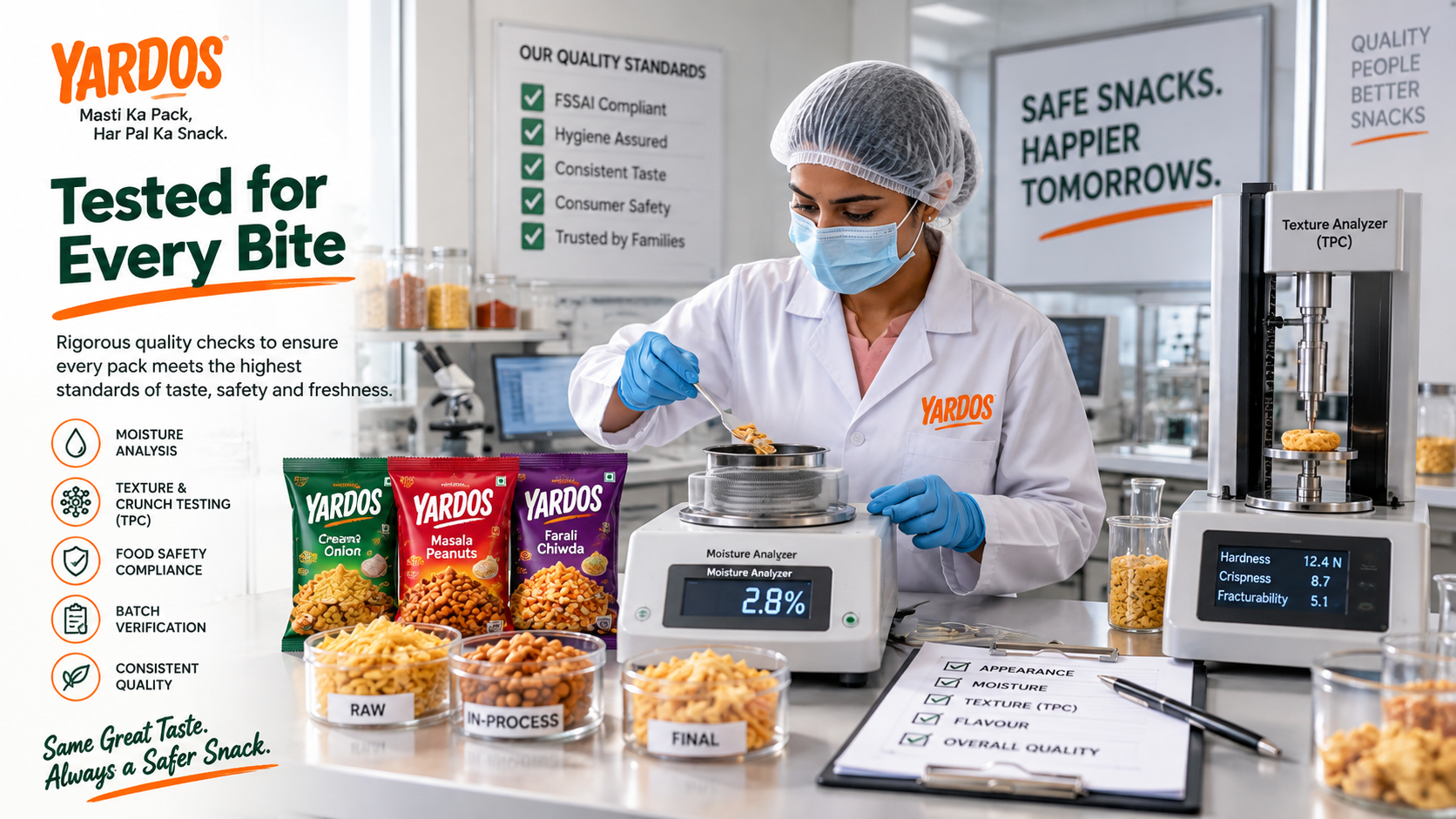
For oil-based snacks, the primary technical concern is the stability of the product during transit. Manufacturers must monitor Total Polar Compounds (TPC) in frying oils, as excessive TPC levels—often exceeding the 25% limit set by FSSAI—can lead to rapid oxidative rancidity during storage. During transit, moisture control is critical. Packaged snacks, such as those produced by Yummyfeast Foods LLP under the Yardos brand, require specific barrier properties in their packaging films to prevent moisture migration. If the relative humidity (RH) in a warehouse or delivery vehicle exceeds 65%, the structural integrity of the snack—its crispness and texture—is compromised. Logistics providers must ensure that storage facilities maintain a temperature range between 20°C and 25°C to preserve the shelf life of the product, particularly for items like Yardos Teekhi Bhadang or Yardos Masala Peanuts.
Navigating Multi-Tier FMCG Distribution Network Challenges
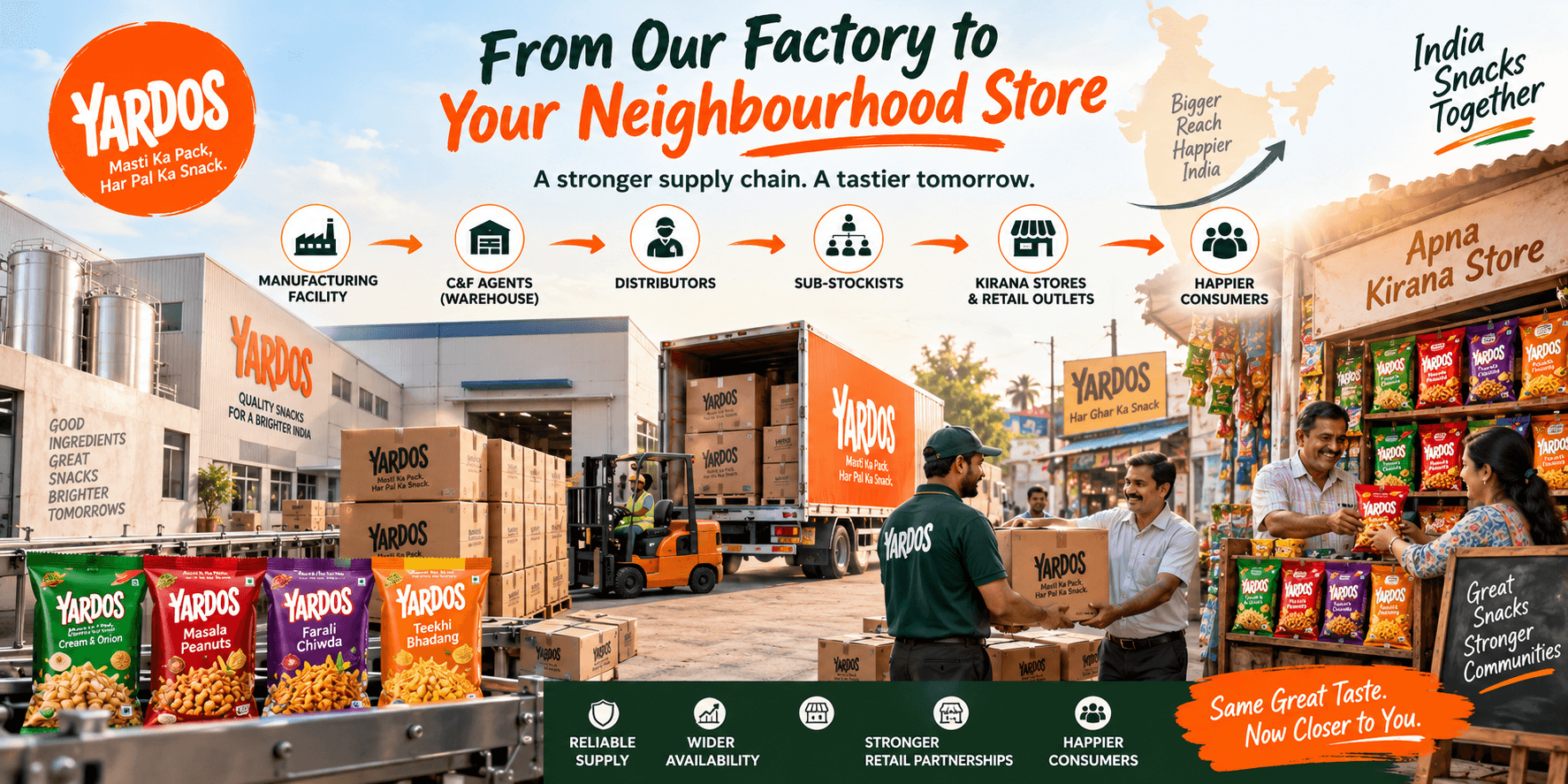
The hierarchy of Indian FMCG distribution typically involves a C&F (Carrying and Forwarding) agent, a primary distributor, and often a network of sub-stockists. This multi-tier structure is designed to penetrate deep into rural and semi-urban markets, but it introduces significant friction. Each hand-off point represents a potential bottleneck where inventory data can be lost or delayed.
Product degradation often occurs at the sub-stockist level, where storage conditions may not mirror the controlled environment of a primary warehouse. To maintain quality, brands must enforce strict SOPs regarding the rotation of stock—following the First-In, First-Out (FIFO) principle. If a distributor holds inventory beyond the recommended shelf-life window, the brand’s reputation suffers. Managing this hierarchy requires clear communication of storage standards and, where possible, the implementation of digital inventory logging that alerts the brand when stock remains static for too long.
Digital Transformation and Real-Time Retail Penetration
Digital transformation in FMCG distribution is centered on Sales Force Automation (SFA) tools. These platforms allow field sales representatives to capture real-time data from Kirana stores, including stock levels, competitor pricing, and shelf-share percentage. By integrating SFA with the distributor’s ERP system, brands gain visibility into the actual sell-out velocity rather than just the sell-in volume.
Predictive analytics further refine this process. By analyzing historical sales data, brands can forecast demand patterns based on seasonality, local events, and regional preferences. For example, demand for specific snacks like Yardos Maharaja Navratan or Yardos Farali Chiwda may spike during festive seasons. GPS-enabled logistics allow for the optimization of delivery routes, ensuring that high-velocity SKUs are replenished more frequently than slower-moving items. This reduces the capital tied up in inventory and ensures that the Kirana shelf is never empty.
Strategies for Reducing Stock-Outs in General Trade
Reducing stock-outs requires a shift toward Just-in-Time (JIT) replenishment models. In the context of general trade, this means the distributor must be able to respond to a Kirana store’s needs within 24 to 48 hours. This requires a high level of coordination between the brand’s regional sales manager and the distributor’s logistics team.
Collaborative planning involves sharing demand forecasts with distributors so they can prepare their storage capacity accordingly. If a brand identifies that Yardos Chatpate Pipes or Yardos Chatpate Wheels are trending in a specific district, the distributor must be incentivized to increase their safety stock of these items. Overstocking is equally detrimental, as it leads to capital blockage and potential product expiry. The goal is to maintain a 'lean' inventory that is replenished frequently based on actual consumption data rather than speculative ordering.
Commercial Perspectives: Scaling Distribution Efficiency
The choice between a direct-to-retail model and a traditional distributor model depends on the density of the market. In urban areas, direct-to-retail can offer higher margins and better control over brand standards. However, in the vast Indian hinterland, the traditional distributor network remains the most cost-effective way to achieve scale.
Measuring success in this environment requires tracking specific KPIs: retail reach (the number of stores stocking the product), effective distribution (the percentage of stores that sold the product in a given period), and shelf-share (the physical space occupied by the brand relative to competitors). Brands must incentivize distributors not just on volume, but on the quality of their retail execution. This includes ensuring that products like Yardos Classic Salted or Yardos Tangy Tomato are displayed prominently and that the store environment meets basic hygiene standards. By aligning the distributor’s financial incentives with the brand’s quality and reach objectives, companies can build a resilient and efficient supply chain.
References
- Food Safety and Standards Authority of India (FSSAI). (2011). Food Safety and Standards (Licensing and Registration of Food Businesses) Regulations, 2011. Schedule 4: General Requirements on Hygienic and Sanitary Practices to be Followed by All Food Business Operators.
- Food Safety and Standards Authority of India (FSSAI). (2017). Guidance Note on Total Polar Compounds (TPC) in Frying Oil. https://www.fssai.gov.in
- Bureau of Indian Standards (BIS). (2018). IS 1497:2018 - Packaged Snacks - Specification.
- Ministry of Commerce and Industry, Government of India. (2022). Logistics Performance Index and Supply Chain Optimization in the FMCG Sector.
- Codex Alimentarius Commission. (2020). Code of Practice for the Packaging and Transport of Tropical Fresh Fruit and Vegetables (Relevant to shelf-stable snack storage conditions).
