
Executive Summary: The Anatomy of Modern Snack Development
Snack innovation within the Indian FMCG sector requires a rigorous intersection of culinary tradition and mechanical precision. For a brand like Yardos, the lifecycle of a product—from initial concept to retail availability—is governed by strict adherence to food science, regulatory mandates, and supply chain efficiency. The process begins with identifying specific consumer snacking occasions. Whether the requirement is for a traditional accompaniment like Yardos Teekhi Bhadang or a modern, texture-focused snack such as Yardos Chatpate Pipes, the development cycle is anchored in the need for consistency, safety, and sensory appeal.
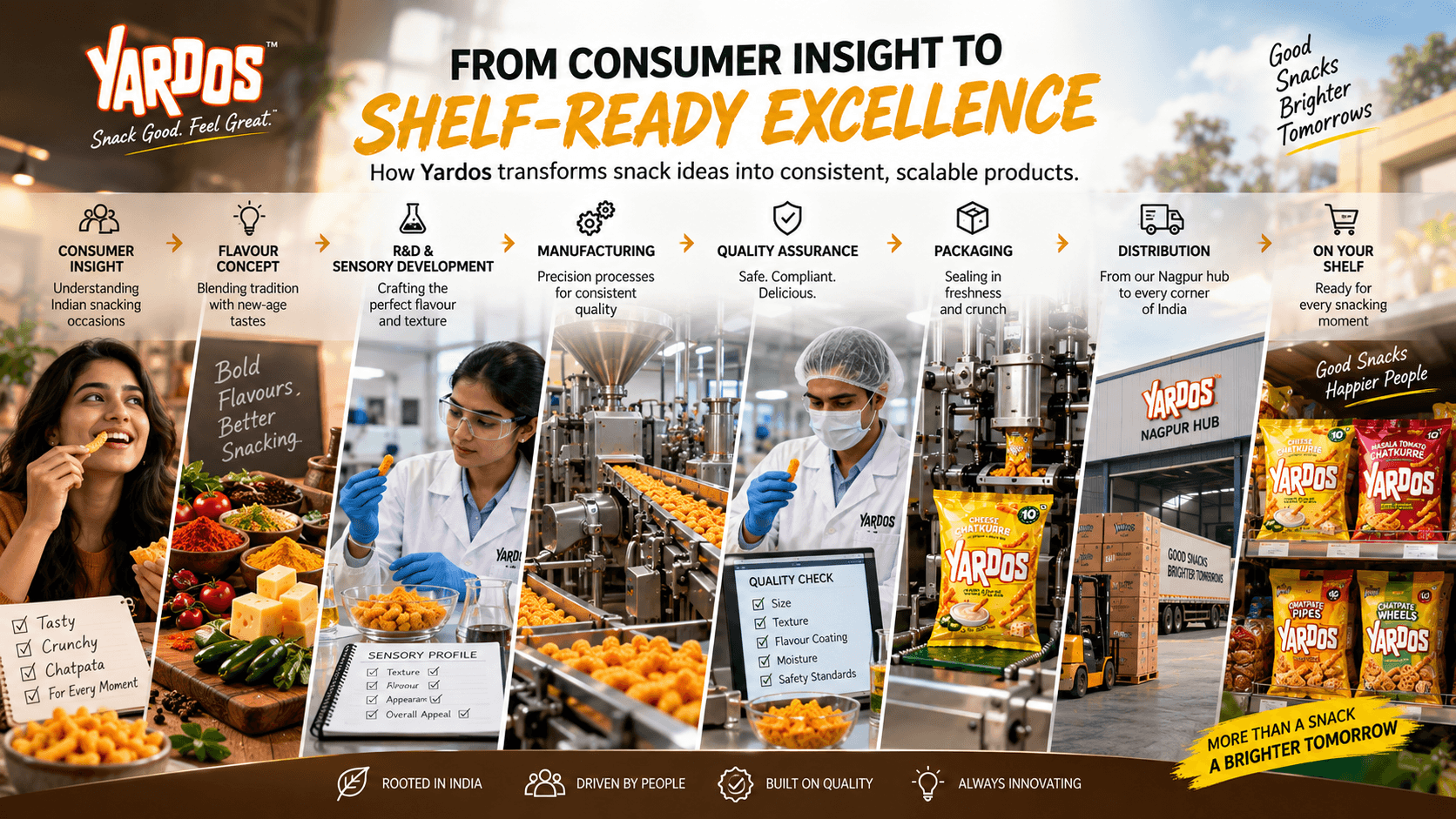
Modern snack development is not merely about flavor; it is about the technical translation of a sensory profile into a repeatable, scalable, and compliant physical product. This article examines how Yardos navigates the transition from conceptualization to shelf-ready status, focusing on the mechanical parameters, regulatory frameworks, and logistical strategies that define high-quality snack manufacturing in India.
Translating Consumer Preferences into Sensory Profiles
Product development at Yardos begins with a deep analysis of Indian snacking occasions. The market demands a spectrum of profiles, ranging from the traditional, spice-forward notes found in Yardos Maharaja Navratan to the specific, regional textures of Yardos Naram Garam Indori. The challenge lies in standardizing these profiles without sacrificing the authentic characteristics that consumers expect.
Sensory profiling involves mapping the flavor architecture of ingredients. For items like Yardos Masala Peanuts, the process requires balancing the lipid content of the nut with the specific particle size of the spice blend to ensure uniform coating. This is achieved through controlled seasoning application systems that monitor the mass-flow rate of dry ingredients against the throughput of the fried base. By defining these sensory targets early, the research and development team can establish the physical specifications—such as moisture content, bulk density, and oil absorption rates—that the manufacturing team must meet.
Technical Precision in Automated Frying and Texture Science
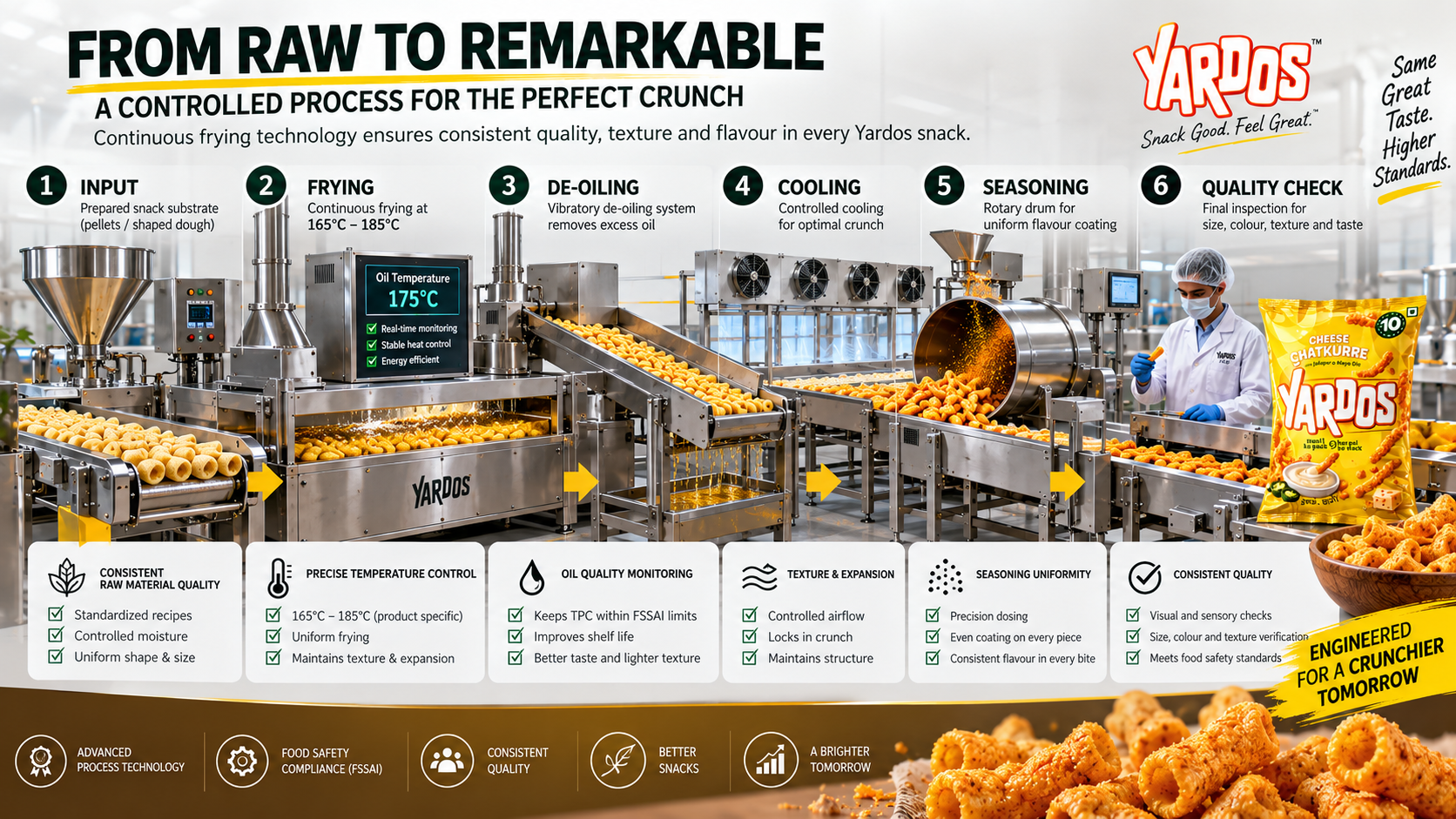
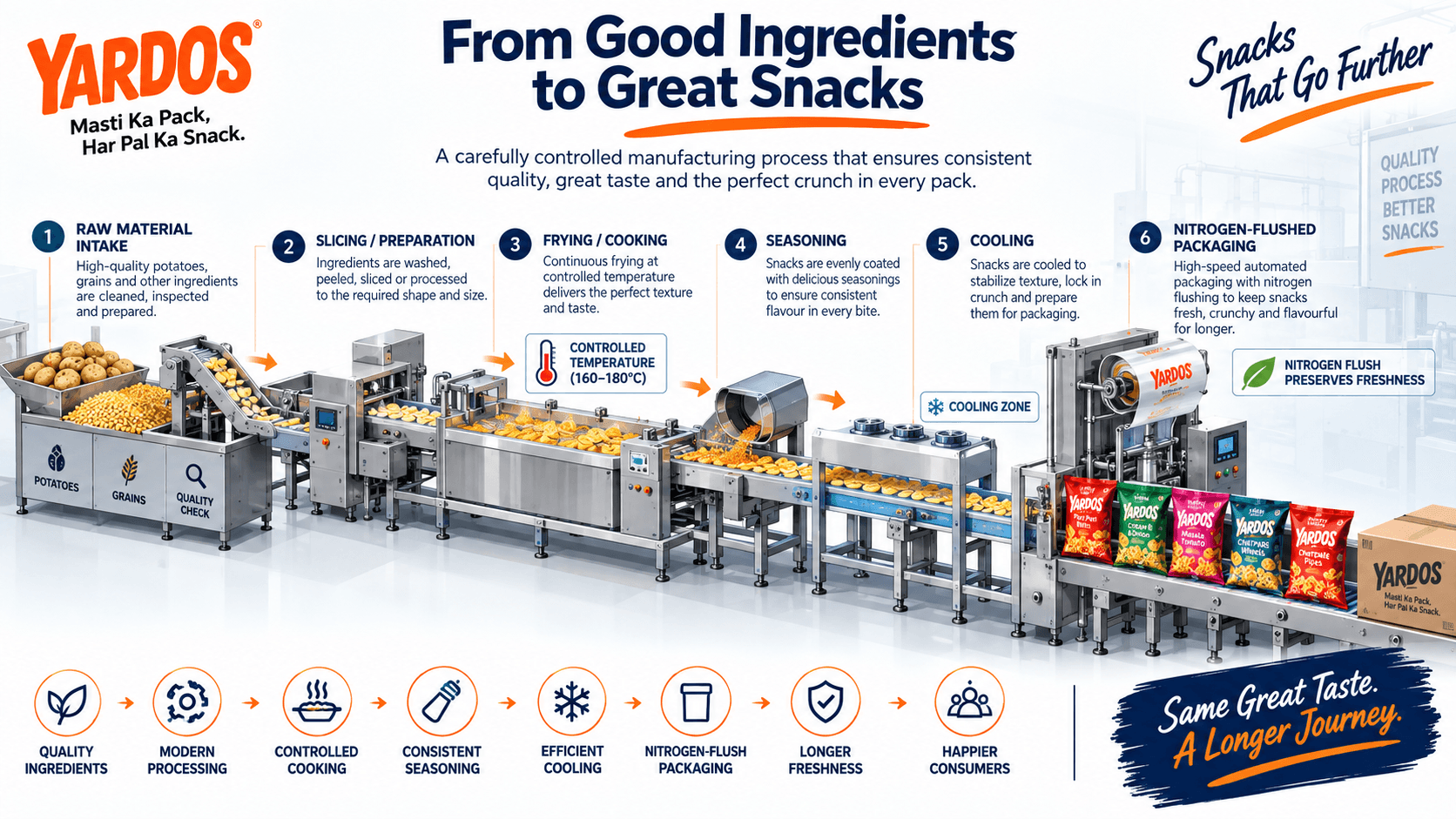
Consistency in snack production is heavily dependent on the use of automated continuous indirect frying systems. Unlike batch frying, which can introduce variability in heat distribution, continuous systems allow for precise control over oil temperature, typically maintained between 165°C and 185°C depending on the product substrate. This thermal stability is critical for managing Total Polar Compound (TPC) levels, which are strictly regulated by the Food Safety and Standards Authority of India (FSSAI) under Schedule 4 of the Licensing and Registration of Food Businesses Regulations.
For products like Yardos Chatpate Wheels and Yardos Chatpate Pipes, texture engineering is paramount. The expansion ratio of the starch-based dough is determined by the moisture content of the raw pellets and the residence time within the fryer. By utilizing automated sensors to monitor oil turnover and filtration cycles, manufacturers can ensure that the final product remains within the safe limits for lipid oxidation. This technical rigor ensures that every batch of Yardos snacks maintains the desired crunch and structural integrity.
Regulatory Compliance and Quality Assurance Frameworks
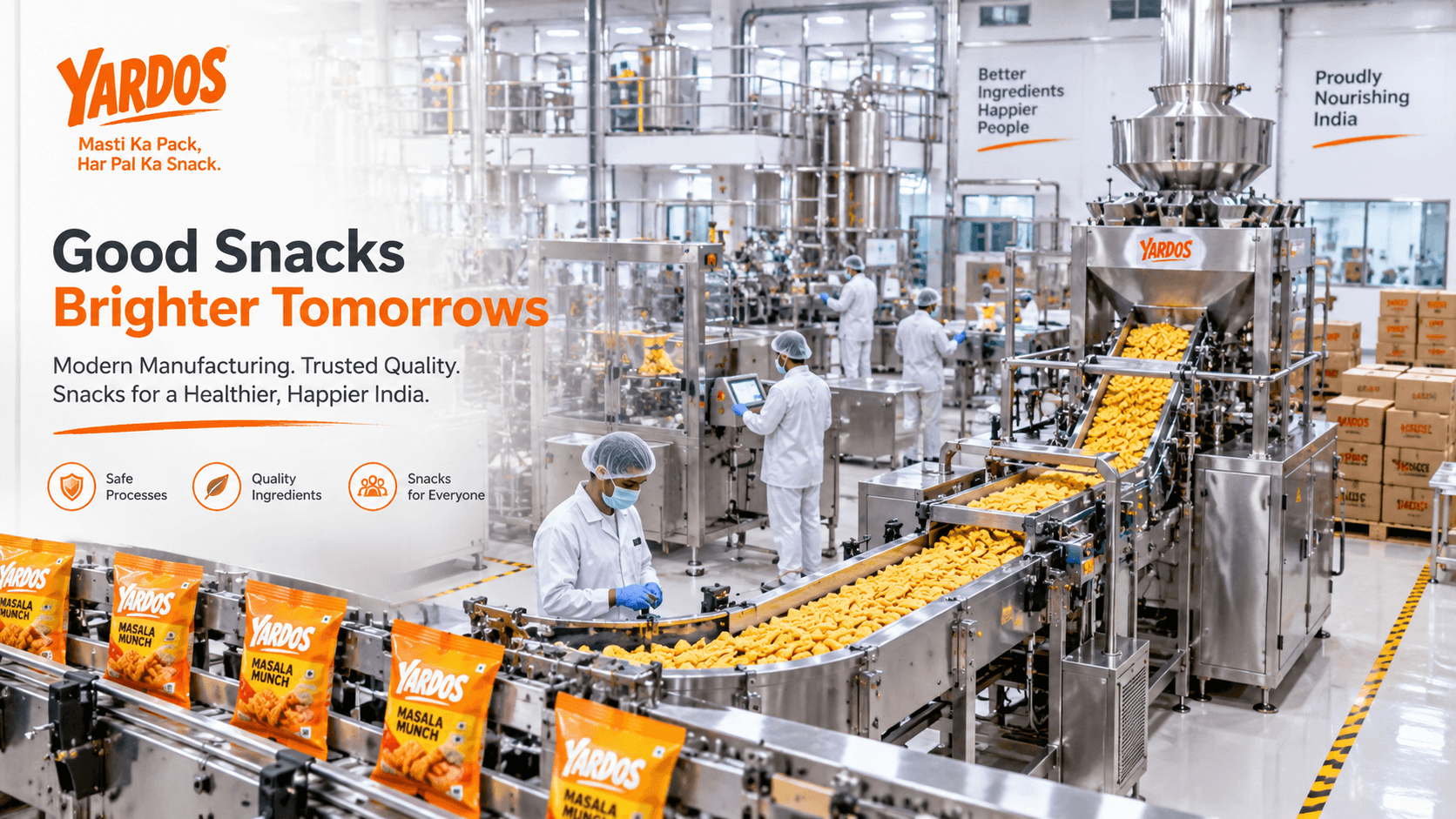
Quality assurance at Yardos is not a final step but an integrated component of the entire manufacturing lifecycle. Adherence to FSSAI standards is the foundational requirement for all operations. This includes strict compliance with Good Manufacturing Practices (GMP) and Good Hygienic Practices (GHP) as outlined in the FSSAI Schedule 4 requirements. These regulations mandate rigorous documentation of every critical control point (CCP), from the initial sourcing of raw ingredients to the final packaging stage.
Quality control checkpoints are established at every transition. Raw materials, such as pulses, grains, and spices, undergo physical and chemical testing to ensure they meet internal specifications for moisture, purity, and microbial safety. During production, real-time monitoring of oil quality—specifically the monitoring of free fatty acids and TPC—is conducted to prevent the formation of harmful compounds. This systematic approach ensures that the finished goods, whether they are Yardos Classic Salted or a more complex flavored variant, meet the highest safety standards before they ever leave the facility.
Packaging Integrity and Shelf-Life Extension Technologies
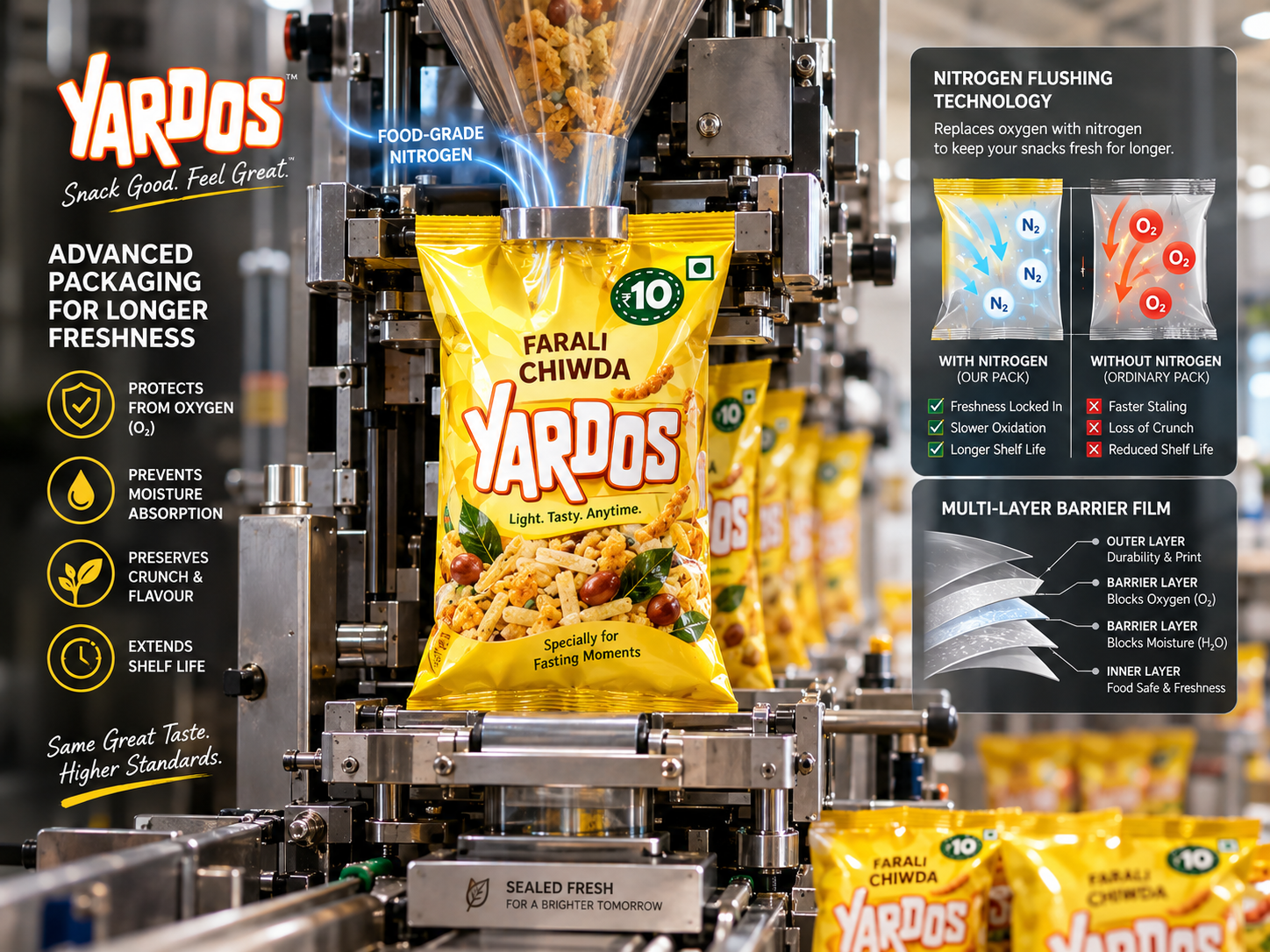
Packaging is the final, and perhaps most critical, barrier between the product and the consumer. For snacks like Yardos Farali Chiwda, which are sensitive to moisture and light, the packaging must provide an effective barrier against oxygen and water vapor. The industry standard for shelf-life extension is the use of Modified Atmosphere Packaging (MAP), specifically nitrogen flushing. By replacing the oxygen inside the bag with food-grade nitrogen, the rate of lipid oxidation is significantly reduced, thereby preserving the freshness and crunch of products like Yardos Peri Peri.
Material selection is equally important. Multi-layered laminates are utilized to provide the necessary barrier properties. These films are tested for their Oxygen Transmission Rate (OTR) and Water Vapor Transmission Rate (WVTR) to ensure that the product remains shelf-stable for the duration of its intended life. This attention to detail ensures that the consumer experience of a Yardos snack is identical whether it is consumed one week or several months after production.
Strategic Logistics: The Nagpur Hub Advantage
Distribution efficiency is a core component of the Yardos operational strategy. Located in Nagpur, Maharashtra, the brand benefits from a central geographic position that acts as a nexus for the Indian logistics network. This location allows for the optimization of supply chain velocity, reducing the time required to move products like Yardos Tangy Tomato and Yardos Cream N Onion from the manufacturing site to retail shelves across Central India.
Effective logistics management involves more than just speed; it involves the maintenance of product integrity during transit. By minimizing the number of handling points and optimizing transit routes, the brand reduces the risk of mechanical damage to the snacks. This logistical advantage ensures that the freshness achieved during the manufacturing and packaging stages is preserved until the product reaches the end consumer. The integration of these logistical practices with the production lifecycle is what allows Yardos to maintain a high standard of service for its retail partners and distributors.
References
- Food Safety and Standards Authority of India (FSSAI). (2011). Food Safety and Standards (Licensing and Registration of Food Businesses) Regulations. Ministry of Health and Family Welfare, Government of India.
- Food Safety and Standards Authority of India (FSSAI). (2017). Manual of Methods of Analysis of Foods: Oils and Fats. FSSAI, New Delhi.
- Codex Alimentarius Commission. (2003). Code of Practice for the Prevention and Reduction of Mycotoxin Contamination in Cereals, Including Annexes on Ochratoxin A, Zearalenone, Fumonisins and Tricothecenes. FAO/WHO.
- Bureau of Indian Standards (BIS). (2015). IS 14846:2015 - Food Safety Management Systems - Requirements for any organization in the food chain.
- Indian Institute of Packaging (IIP). (2020). Guidelines for Packaging of Snack Foods for Shelf Life Extension. Mumbai, India.