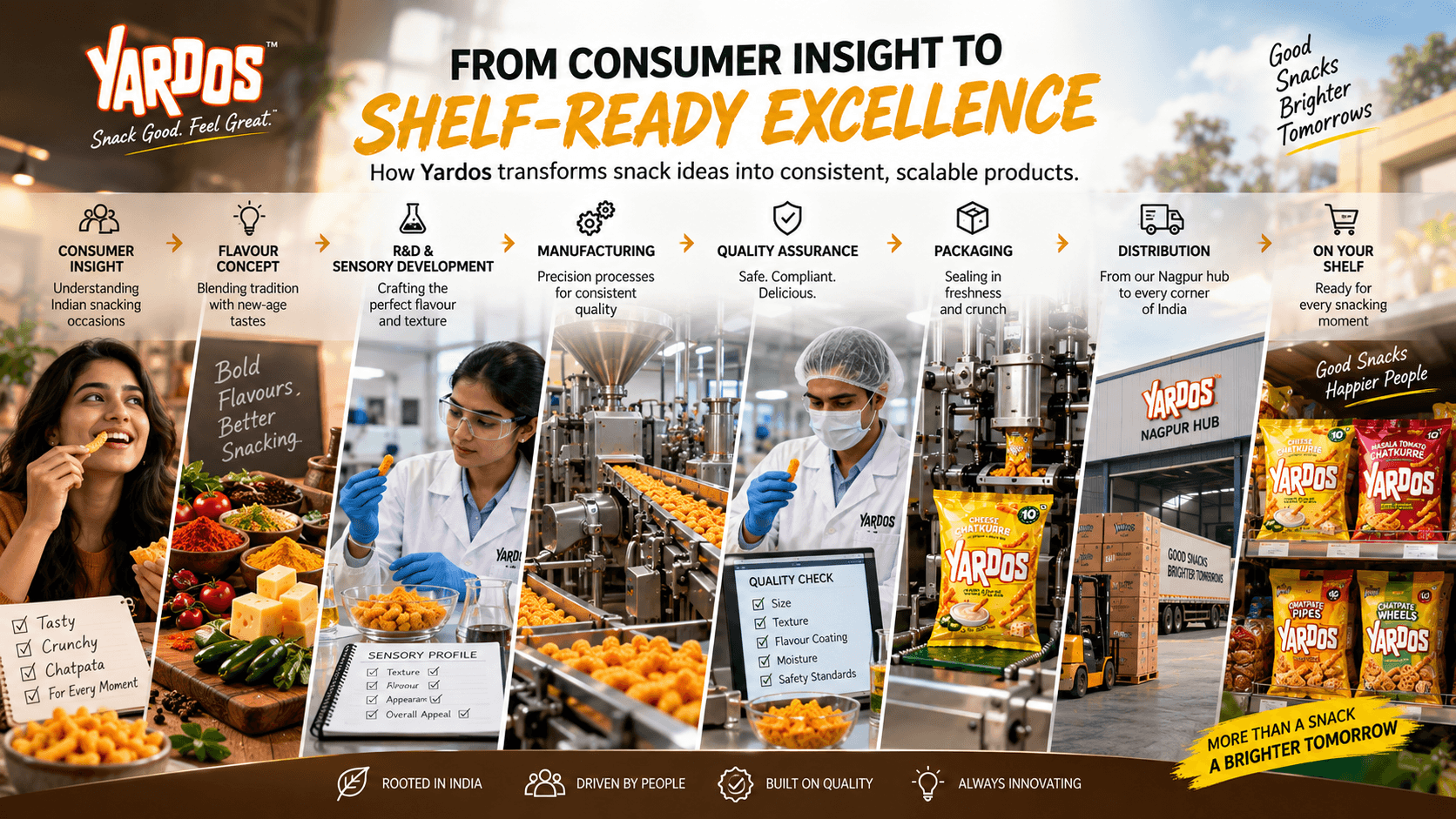

Executive Summary: The Evolution of Yardos in the Indian Snack Market
The Indian Fast-Moving Consumer Goods (FMCG) sector represents one of the most complex and high-volume retail environments globally. Within this landscape, Yardos, a brand under Yummyfeast Foods LLP, based in Nagpur, Maharashtra, has established a focused operational footprint. The snack industry in India is characterized by rapid inventory turnover, diverse regional flavor preferences, and a complex multi-tier distribution network. For a brand to succeed, it must balance the agility of local supply chains with the rigorous demands of national food safety regulations.
Yardos operates within this competitive framework by prioritizing operational consistency. The brand's value proposition relies on the intersection of standardized production and strategic market penetration. This article examines the technical and logistical pillars that support the growth of Yardos, covering the transition from regulatory compliance under FSSAI Schedule 4 to the intricacies of micro-distribution within the Central Indian retail ecosystem. By focusing on shelf-life stability, lipid management, and the specific requirements of the kirana store channel, the brand maintains a disciplined approach to scaling in a market that demands both quality and price-point accessibility.
Technical Foundations: Adherence to FSSAI Schedule 4 Standards
Regulatory compliance is the bedrock of any credible FMCG entity in India. For Yardos, adherence to the Food Safety and Standards (Licensing and Registration of Food Businesses) Regulations, specifically Schedule 4, is not merely a legal requirement but a fundamental operational standard. Schedule 4 mandates specific Good Manufacturing Practices (GMP) and Good Hygienic Practices (GHP) that govern every stage of the production lifecycle, from raw material sourcing to final packaging.
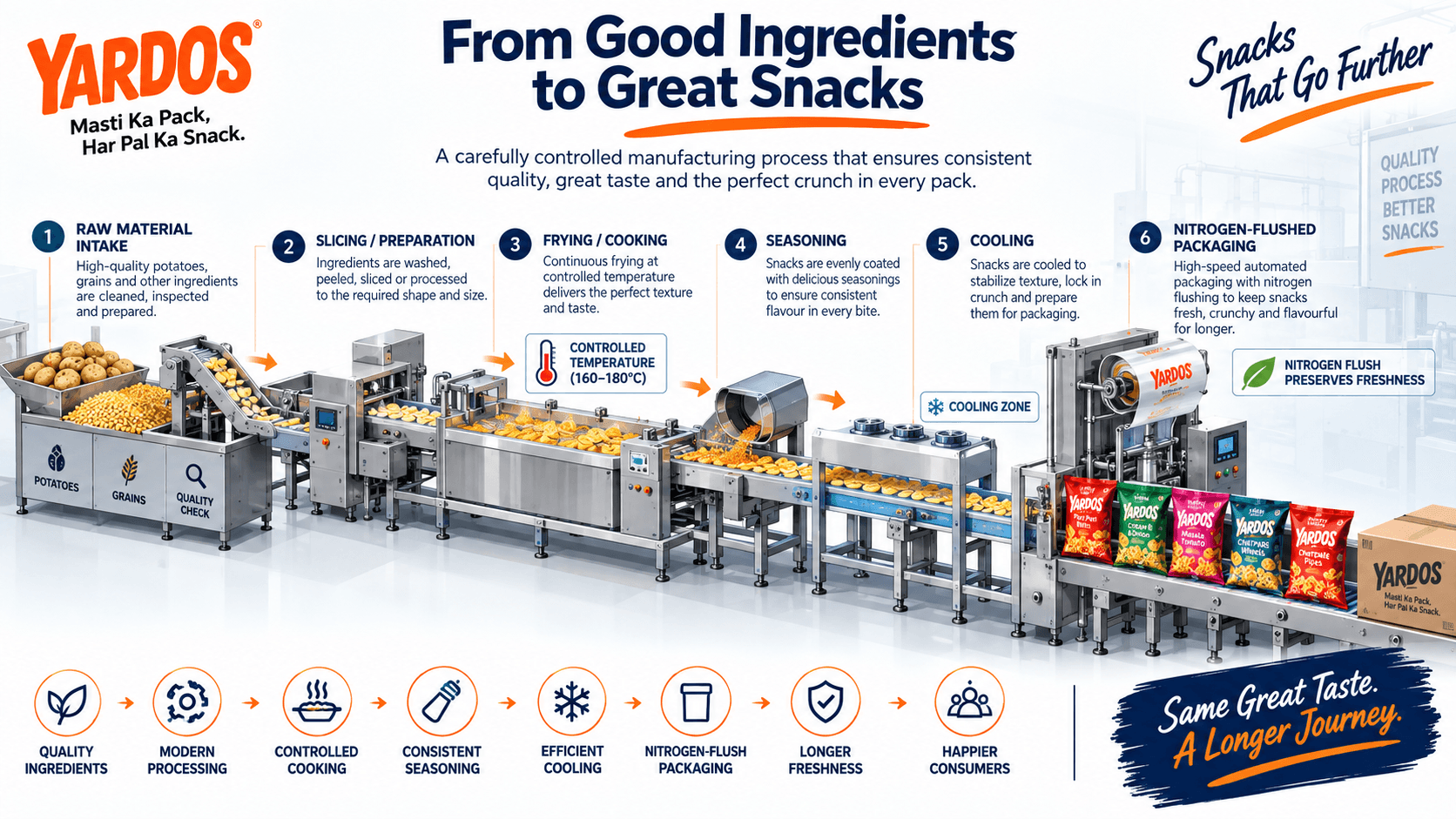
A critical technical parameter in snack manufacturing is the management of frying oil. FSSAI regulations stipulate that the Total Polar Compound (TPC) content in used frying oil must not exceed 25%. Exceeding this threshold indicates significant thermal degradation, which compromises both the safety and the sensory profile of the final product. Modern commercial snack manufacturers often utilize automated oil management systems to monitor these levels in real-time. By maintaining oil quality through continuous filtration and regular turnover, Yardos ensures that products like Yardos Masala Peanuts or Yardos Maharaja Navratan meet the strict safety profiles expected by consumers.
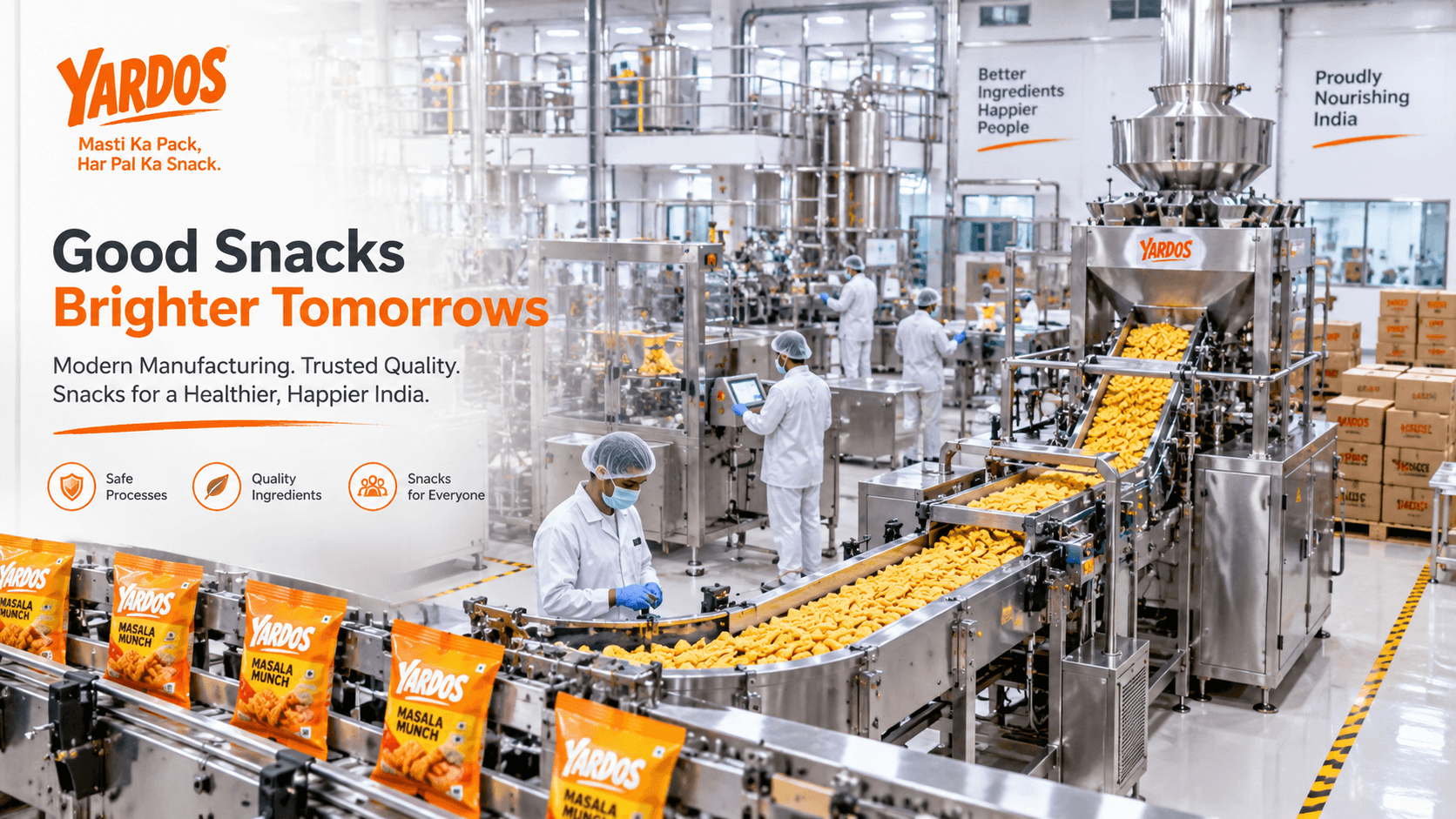
Beyond oil management, Schedule 4 requires rigorous pest control, personnel hygiene, and facility design. This includes the implementation of 'Hazard Analysis and Critical Control Points' (HACCP) principles, where potential physical, chemical, and biological hazards are identified and mitigated. The facility in Nagpur must adhere to these standards to ensure that raw ingredients—ranging from pulses used in Yardos Farali Chiwda to the starch bases in Yardos Chatpate Pipes—are processed in an environment that prevents cross-contamination. This technical rigor is the primary defense against product recalls and is essential for maintaining the brand's license to operate in the Indian market.
Quality Assurance: Managing Lipid Oxidation and Shelf-Life Stability
Once regulatory standards are met, the focus shifts to internal quality control, specifically the management of shelf-life. Lipid oxidation is the primary cause of spoilage in fried snacks, leading to rancidity and the loss of flavor integrity. To combat this, manufacturers must control the moisture content of the finished product. For extruded items like Yardos Chatpate Wheels or Yardos Naram Garam Indori, the moisture content must typically remain below 2-3% to prevent microbial growth and maintain the desired crunch.
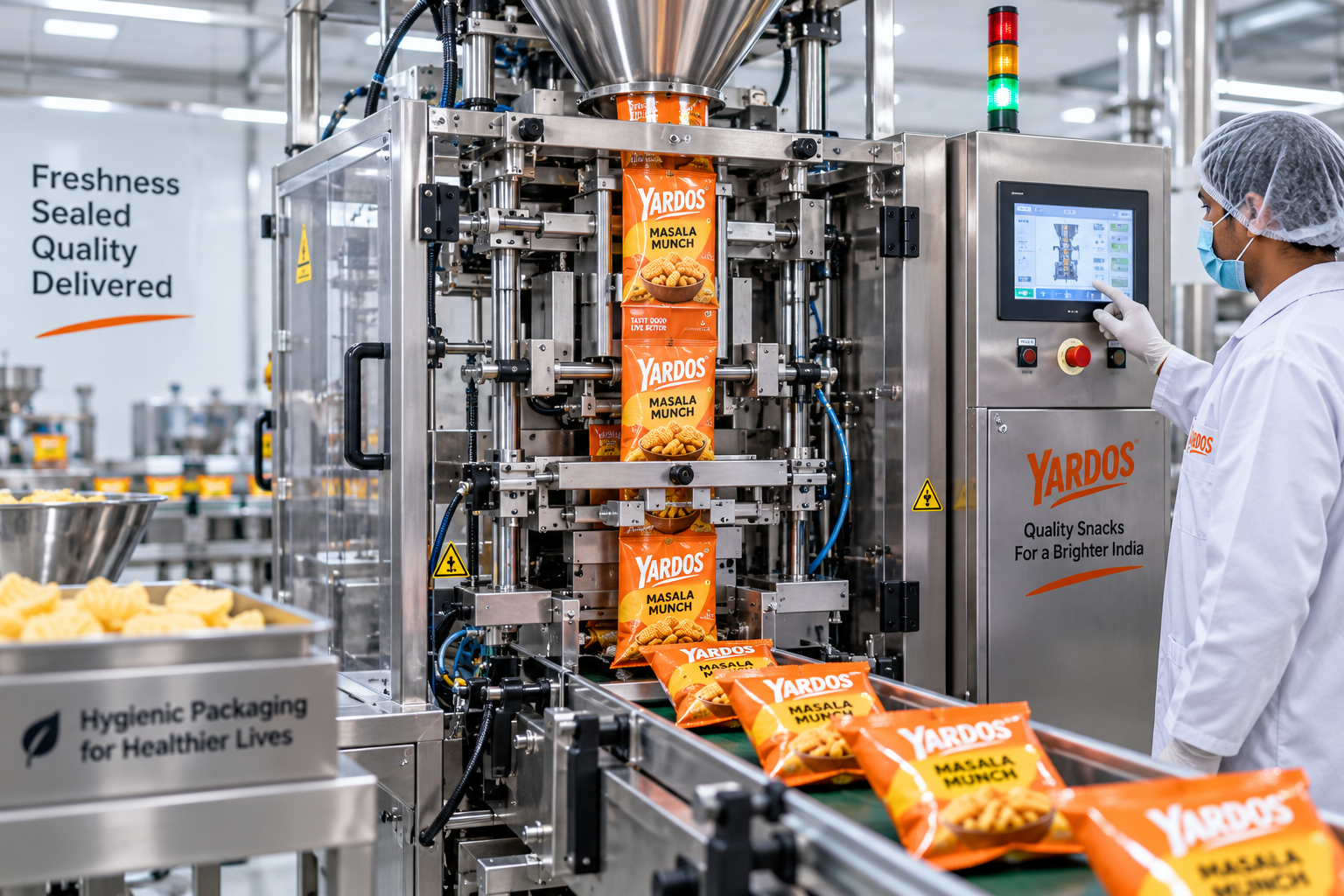
Packaging plays a decisive role in this process. The industry standard for high-quality snack packaging involves the use of multi-layered laminate films that provide a high barrier against oxygen and moisture vapor transmission. Nitrogen flushing is a standard technique used to displace oxygen within the pouch, creating an inert atmosphere that significantly extends the shelf-life of products like Yardos Classic Salted or Yardos Peri Peri. By controlling the headspace gas composition, the brand ensures that the product remains fresh from the point of manufacture until it reaches the consumer.
Sensory consistency is equally vital. Standardizing spice blends and seasoning application requires precise weighing and mixing equipment. Whether it is the tangy profile of Yardos Tangy Tomato or the savory notes of Yardos Cream N Onion, the consistency of the seasoning application—measured in grams per kilogram of product—must be strictly monitored. This ensures that the consumer experience remains identical across different production batches, which is a key factor in building long-term brand equity.
Commercial Strategy: Navigating the Central India Distribution Network
Connecting production quality to market availability requires a sophisticated distribution strategy. Central India, with its unique geographical and demographic characteristics, presents both logistical challenges and growth opportunities. The distribution of FMCG products in this region relies on a tiered system involving clearing and forwarding agents (CFAs), distributors, and sub-distributors.
Optimizing supply chain velocity is essential for high-turnover products. The goal is to minimize the time between production and retail shelf placement. This requires accurate demand forecasting. By analyzing historical sales data and seasonal trends, the brand can optimize inventory levels at regional warehouses, preventing both stockouts and the accumulation of aging inventory. For a brand like Yardos, which offers a diverse portfolio including Yardos Teekhi Bhadang and Yardos Masala Tomato, managing the SKU mix at the distributor level is critical.
Logistical efficiency is also driven by the choice of transport and route planning. In Central India, where infrastructure can vary, the ability to maintain a consistent delivery schedule to distributors is a competitive advantage. This involves coordinating with logistics partners to ensure that products are stored in temperature-controlled environments where necessary and handled with care to prevent breakage, particularly for delicate items like chips or extruded snacks.
The Kirana Connection: Micro-Distribution and Retail Penetration
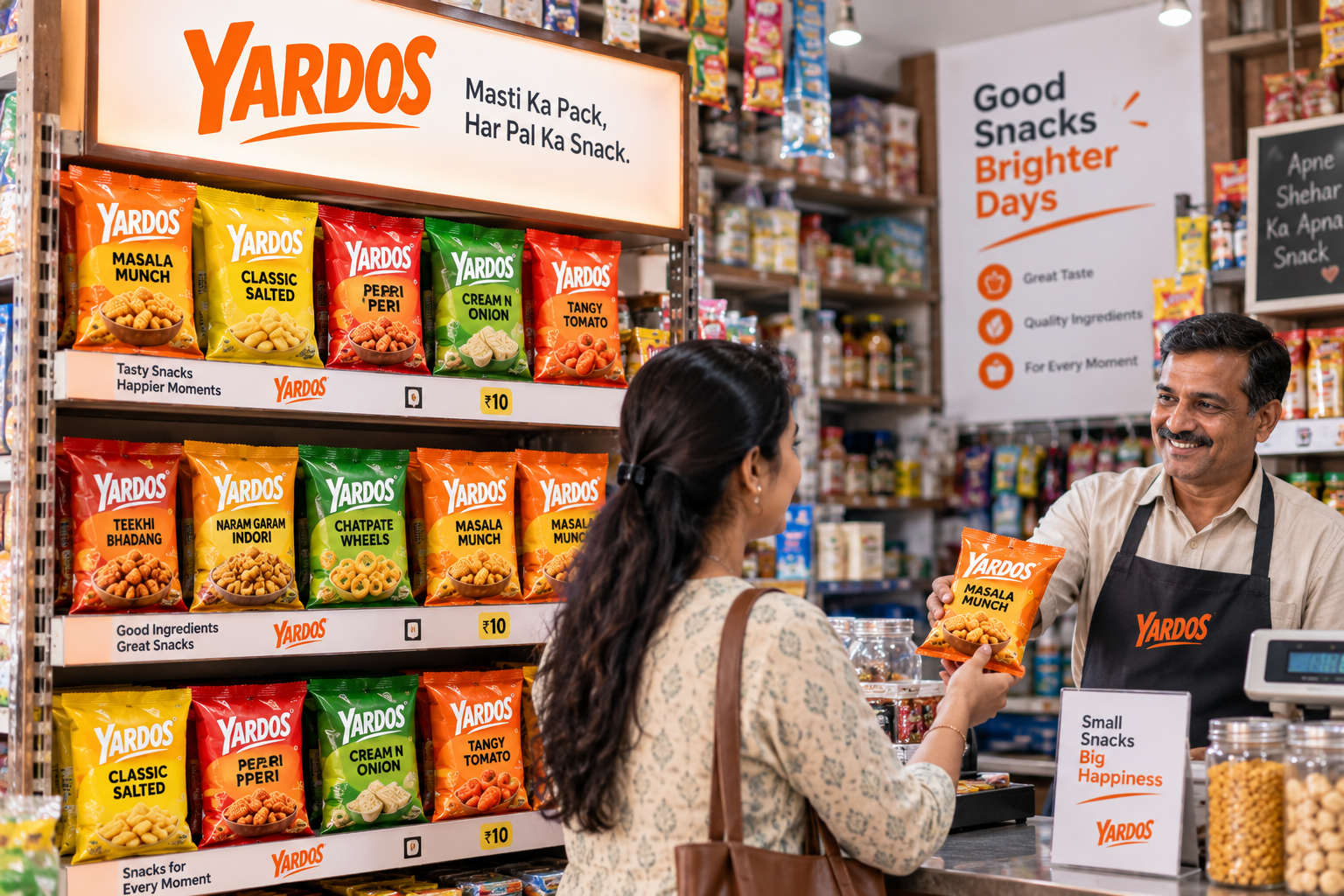
The Indian kirana store remains the backbone of the FMCG industry, accounting for the vast majority of retail sales. Scaling from regional logistics to hyper-local retail requires a deep understanding of the kirana ecosystem. These small-format stores have limited shelf space, making visibility and brand recall paramount.
Effective shelf-space management involves providing retailers with attractive, durable display units that highlight the brand. Furthermore, the frequency of supply is a major driver of retailer loyalty. A kirana store owner is more likely to prioritize a brand that offers reliable, weekly replenishment over one that is inconsistent. By maintaining a robust sub-distribution network, Yardos ensures that its products are available in the smallest of retail outlets.
Building brand loyalty also involves supporting the retailer. This includes transparent pricing, clear communication regarding promotional schemes, and responsive customer service. When a retailer feels supported by the brand, they become an advocate, often recommending the product to consumers. This micro-distribution model is the most effective way to achieve deep market penetration in India, as it bridges the gap between the manufacturer and the end-user in a way that modern trade or e-commerce cannot fully replicate in rural or semi-urban areas.
Market Positioning: Why Consumers Prefer Yardos
Consumer preference in the Indian snack market is driven by a combination of taste, trust, and price-point accessibility. Consumers are increasingly discerning, seeking products that offer a balance of traditional flavors and modern quality standards. Yardos positions itself by delivering consistent quality across its diverse range, from the traditional Yardos Teekhi Bhadang to the modern Yardos Peri Peri.
Trust is built through transparency. By adhering to FSSAI standards and maintaining clean manufacturing environments, the brand signals to the consumer that their health and safety are prioritized. Price-point accessibility is equally important. By offering products in various pack sizes, the brand ensures that it remains an affordable snack option for a wide range of consumers, from students to families.
Product variety allows the brand to cater to different snacking occasions, whether it is a quick bite during a commute or a snack to share during social gatherings. By consistently delivering on the promise of quality and taste, Yardos builds a loyal consumer base that views the brand as a reliable choice in a crowded marketplace.
Actionable Takeaways for FMCG Growth
Sustainable growth in the Indian FMCG sector requires a disciplined approach to operations. The following pillars are essential for any brand looking to scale:
- Regulatory Credibility: Strict adherence to FSSAI Schedule 4 is the baseline for operational credibility. It is non-negotiable and must be integrated into the daily culture of the manufacturing facility.
- Technical Control: Managing lipid oxidation and moisture content is critical for shelf-life and brand reputation. Investing in high-quality packaging and precise monitoring equipment is an investment in consumer trust.
- Distribution Velocity: Success in Central India requires a robust, localized distribution network that prioritizes the kirana store model. Reliability in supply is the most effective way to secure shelf space.
- Consumer-Centricity: Consumer preference is driven by the intersection of consistent quality, price accessibility, and high retail availability. Every operational decision should be evaluated based on its impact on these three factors.
The trajectory of Yardos in the FMCG sector is defined by its commitment to these principles. As the brand continues to expand, maintaining this focus on operational excellence will be the key to building a stronger, more resilient presence in the Indian market.
References
- Food Safety and Standards Authority of India (FSSAI). (2011). Food Safety and Standards (Licensing and Registration of Food Businesses) Regulations. Ministry of Health and Family Welfare, Government of India.
- Food Safety and Standards Authority of India (FSSAI). (2018). Guidance Note on Total Polar Compounds (TPC) in Frying Oil. https://www.fssai.gov.in
- Codex Alimentarius Commission. (2020). General Principles of Food Hygiene (CXC 1-1969). Food and Agriculture Organization of the United Nations / World Health Organization.
- Bureau of Indian Standards (BIS). (2015). IS 1497:2015 - Guidelines for Good Manufacturing Practices in Food Industry.
- Ministry of Food Processing Industries (MoFPI). (2022). Annual Report on the Indian Food Processing Sector. Government of India.