
Executive Summary: The Evolution of Savory Snacking in India
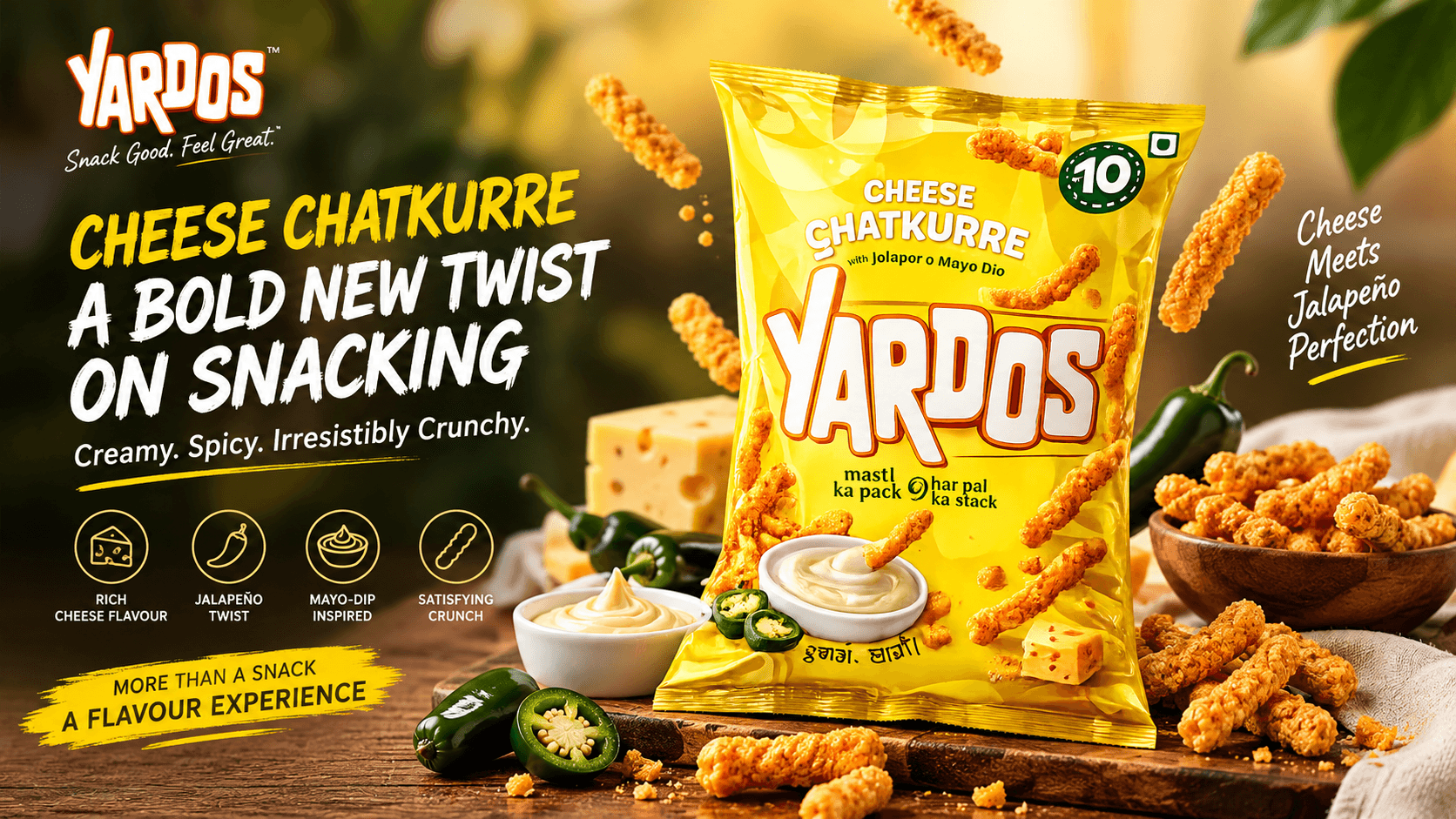
The Indian snack industry is undergoing a significant transition. Consumer preferences are shifting away from traditional, single-note profiles toward complex, multi-dimensional flavour experiences. This evolution is driven by a younger demographic that seeks global flavour profiles integrated into familiar, crunchy formats. Yardos Cheese Chatkurre serves as a primary case study in this shift, representing a deliberate effort to balance creamy, dairy-forward notes with the sharp, piquant heat of jalapeño. By focusing on the interplay between texture, heat, and creaminess, this product highlights how modern snack engineering can satisfy the demand for sophisticated, dip-inspired flavour profiles in a convenient, shelf-stable format.
The Science of Texture: Engineering the Perfect Crunch
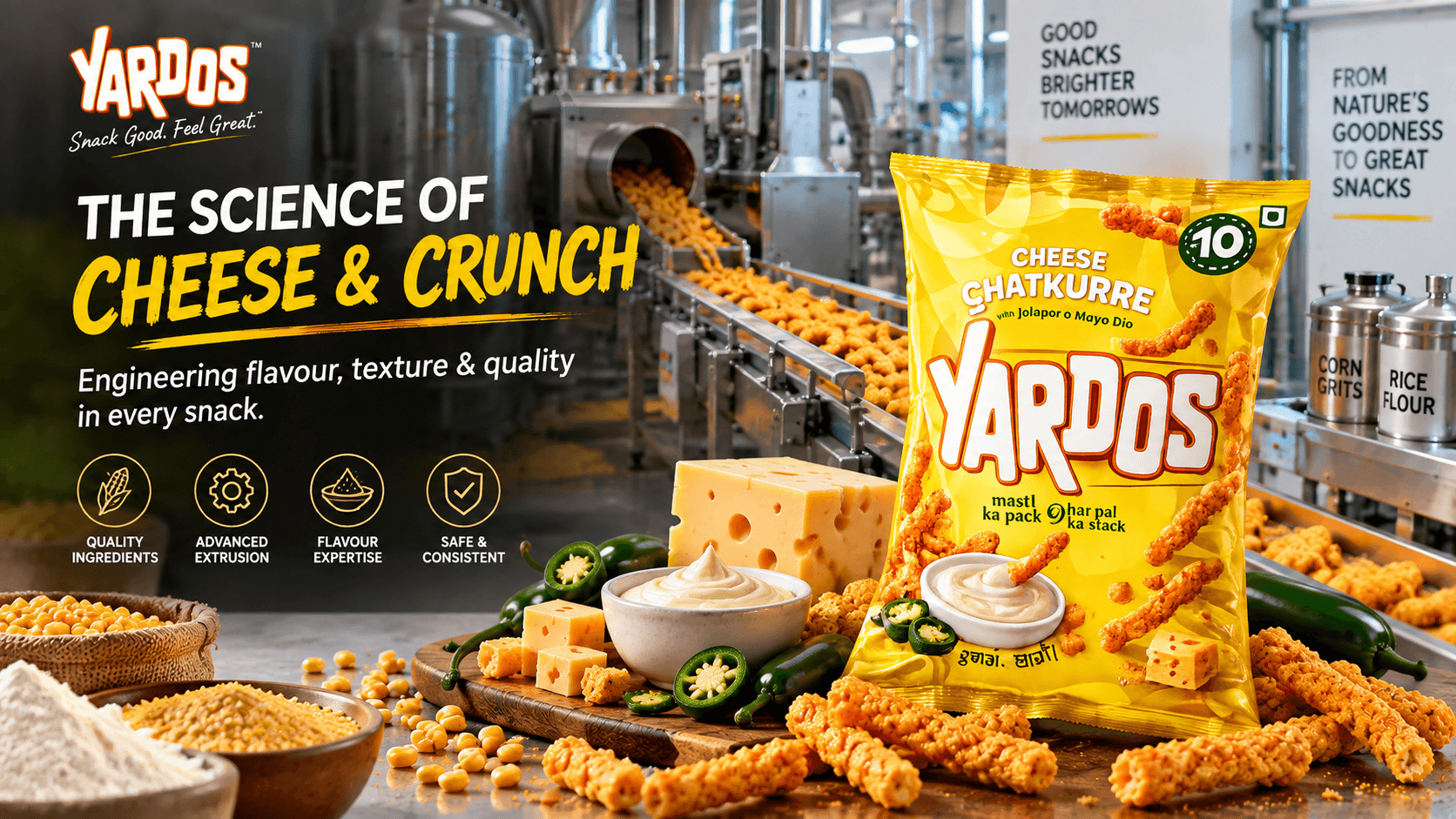
The physical mechanics of a snack are as vital as its flavour. For extruded products like Yardos Cheese Chatkurre, the crunch is a result of precise starch gelatinization and moisture control. During the extrusion process, raw ingredients—typically a blend of corn grits and rice flour—are subjected to high pressure and temperature. This process gelatinizes the starches, creating a porous structure that is essential for the final mouthfeel.
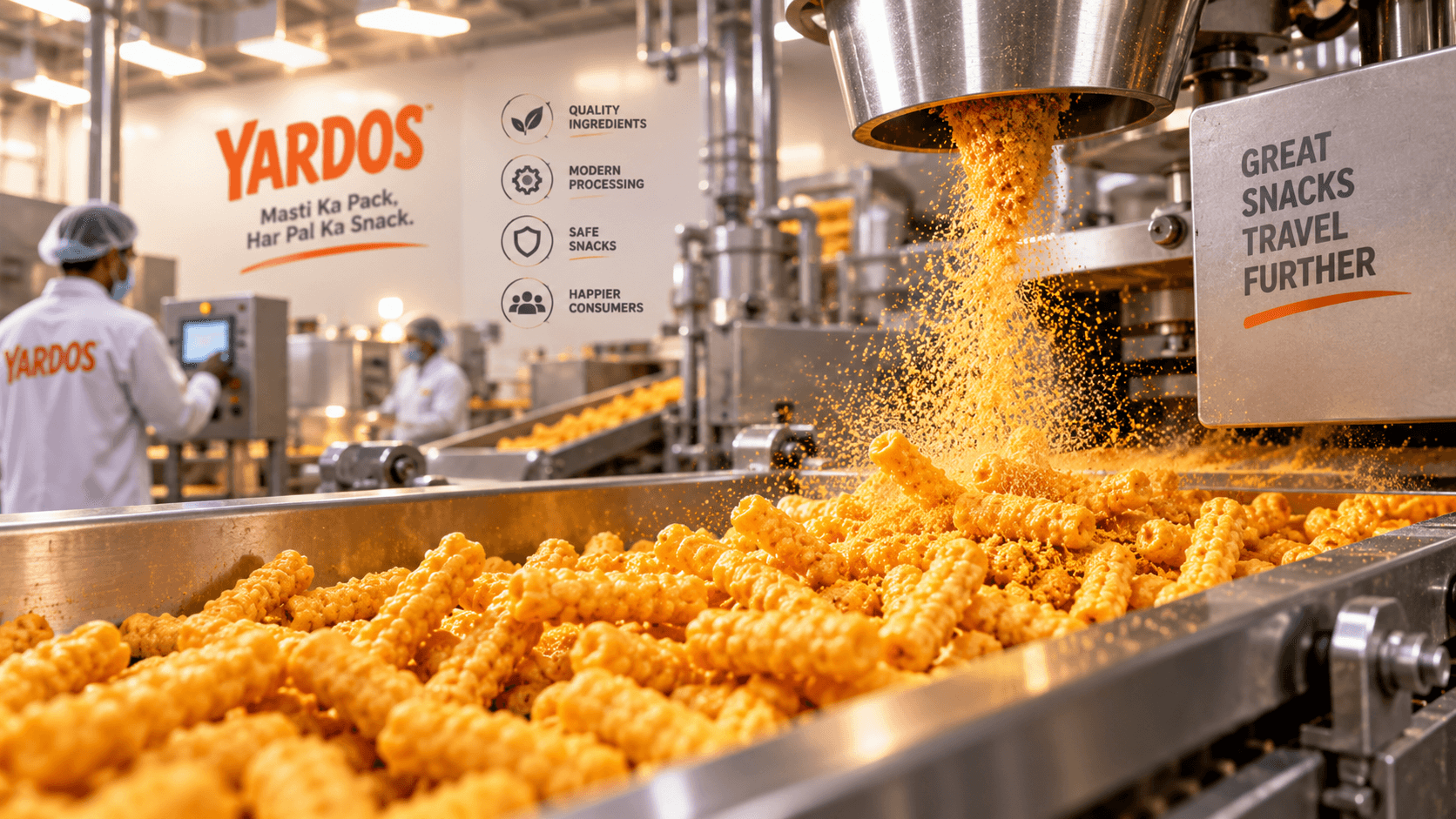
Following extrusion, the product undergoes drying to reduce moisture content to a specific range, typically between 1.5% and 2.5%. This moisture reduction is critical; excess moisture leads to a soft, unappealing texture, while insufficient moisture can cause the product to become overly brittle. Modern commercial snack manufacturers utilize automated continuous indirect frying systems to manage this phase. These systems allow for precise control over oil temperature, usually maintained between 170°C and 185°C. By regulating the heat transfer rate and the residence time of the product within the frying medium, manufacturers ensure a consistent, uniform crispness that defines the consumer experience.
Flavour Architecture: Balancing Cheese and Jalapeño Heat
The seasoning application process is where the flavour architecture is finalized. The challenge lies in the chemical interplay between dairy-based cheese solids and the capsaicin-derived heat of jalapeño. Cheese solids provide a fatty, savory base that coats the palate, while the jalapeño notes introduce a sharp, acidic contrast that prevents the flavour from becoming one-dimensional.
Seasoning adhesion technology is employed to ensure that the spice blend remains uniform across the entire surface area of the product. This involves the application of a thin layer of vegetable oil or a specialized adhesive agent, followed by the dry seasoning blend. This process ensures that every bite provides the same intensity of flavour. When comparing the profile of Yardos Cheese Chatkurre to other offerings like Yardos Cream N Onion or Yardos Peri Peri, the distinction is clear: while Cream N Onion relies on the mellow, aromatic notes of allium and dairy, and Peri Peri focuses on a complex, chili-heavy heat, Yardos Cheese Chatkurre occupies a unique position by utilizing the jalapeño as a bridge between the cheese and the crunchy base.
Innovation in Sensory Cues: The Mayo-Dip Inspired Experience
One of the most significant innovations in contemporary snacking is the concept of 'Mayo-Dip Inspired' flavour cues. This approach seeks to replicate the mouthfeel and flavour intensity of a snack dipped in a creamy, acidic condiment without the need for actual refrigeration or complex packaging. By incorporating notes of emulsified fats, vinegar-derived acidity, and savory aromatics, manufacturers can create a 'dipped' mouthfeel that resonates with consumers who value convenience.
This strategy is rooted in consumer psychology. The act of dipping a snack is often associated with social, leisurely consumption. By embedding these sensory cues directly into the seasoning of Yardos Cheese Chatkurre, the product offers a 'ready-to-eat' convenience that mimics the dip-based experience. This innovation is particularly effective for on-the-go snacking, where the consumer desires a complex flavour profile but lacks the time or environment for traditional dipping.
Quality Assurance and FSSAI Compliance Standards
Product integrity is maintained through strict adherence to the Food Safety and Standards Authority of India (FSSAI) regulations. Specifically, manufacturing facilities must comply with Schedule 4 of the Food Safety and Standards (Licensing and Registration of Food Businesses) Regulations, which outlines the requirements for Good Manufacturing Practices (GMP) and Good Hygienic Practices (GHP).
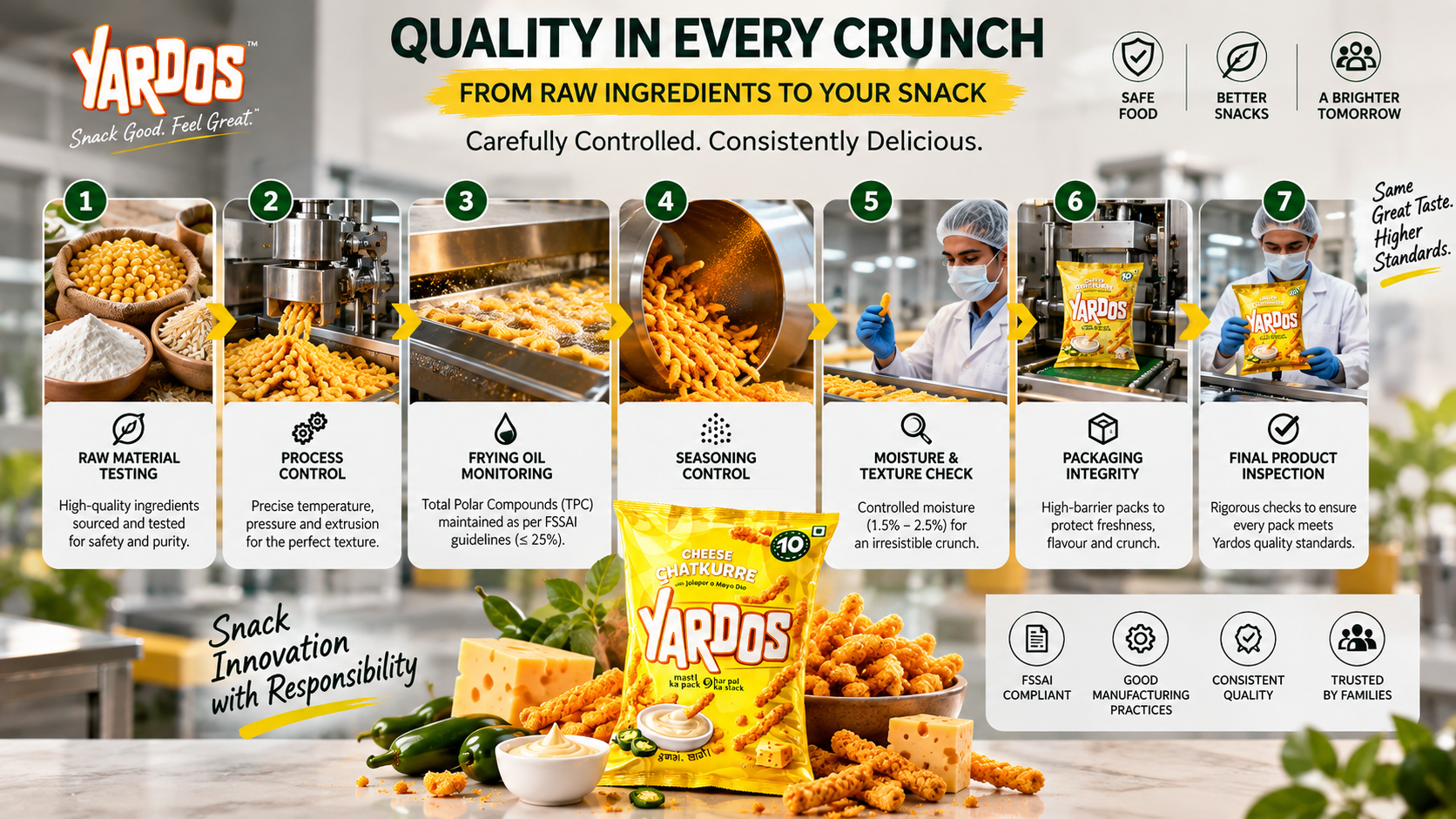
Critical to this process is the monitoring of Total Polar Compounds (TPC) in the frying oil. As oil is used, thermal degradation leads to the formation of TPC, which can negatively impact both the safety and the flavour of the snack. FSSAI guidelines mandate that TPC levels in frying oil must not exceed 25%. By implementing automated monitoring systems, manufacturers can ensure that the oil is replaced or filtered at the appropriate intervals, thereby maintaining the quality of the finished product and ensuring that the cheese and jalapeño flavour notes remain clean and free from rancidity.
Commercial Strategy: Impulse Packaging and Market Accessibility
The commercial success of a snack is heavily dependent on its accessibility. Impulse-sized packaging is a strategic tool designed to lower the barrier to entry for new consumers. By offering Yardos Cheese Chatkurre in smaller, affordable formats, the brand encourages trial and repeat purchase behavior. This packaging strategy is designed for high-traffic retail environments, such as convenience stores and kiosks, where the purchase decision is often spontaneous.
Furthermore, the packaging material itself plays a role in product longevity. High-barrier, multi-layered films are used to protect the product from moisture, oxygen, and light—the three primary factors that lead to the degradation of flavour and texture. This ensures that the product maintains its crunch and flavour intensity from the point of manufacture to the moment of consumption, regardless of the supply chain duration.
Conclusion: The Future of Complex Flavour Profiles
Yardos Cheese Chatkurre represents a sophisticated integration of texture, heat, and sensory innovation. By leveraging advanced extrusion technology, precise seasoning application, and a deep understanding of the Indian palate, the product successfully bridges the gap between traditional crunchy snacks and modern, dip-inspired experiences. As the market continues to evolve, the demand for such complex, multi-dimensional profiles is expected to grow. The future of the snack industry lies in this ability to deliver high-quality, safe, and innovative flavour experiences that meet the needs of a discerning and convenience-driven consumer base.
References
- Food Safety and Standards Authority of India (FSSAI). (2011). Food Safety and Standards (Licensing and Registration of Food Businesses) Regulations. Ministry of Health and Family Welfare, Government of India.
- Food Safety and Standards Authority of India (FSSAI). (2017). Guidance Note on Frying of Food Products. Available at: https://www.fssai.gov.in.
- Codex Alimentarius Commission. (2003). Code of Practice for the Prevention and Reduction of Mycotoxin Contamination in Cereals. FAO/WHO.
- Fellows, P. J. (2016). Food Processing Technology: Principles and Practice (4th ed.). Woodhead Publishing.
- Singh, R. P., & Heldman, D. R. (2014). Introduction to Food Engineering (5th ed.). Academic Press.