
The Science of Cheese & Crunch: Engineering the Perfect Cheese Snack for the Indian Market
Executive Summary: The Sensory Appeal of Cheese Snacks in India
The Indian snack industry is undergoing a structural transformation. While traditional namkeens remain a staple, the rapid growth of cheese snacks in India reflects a broader shift toward globalized flavor profiles. This evolution is not merely a trend; it is a technical challenge that requires precision in food engineering, flavor chemistry, and supply chain management. The appeal of cheese-flavored snacks lies in the complex interplay between texture—the 'crunch'—and the sensory profile of dairy lipids combined with savory seasonings. This article examines the technical parameters required to produce high-quality snacks that meet the rigorous expectations of the modern Indian consumer, while maintaining strict compliance with FSSAI standards.
The Physics of Extrusion: Achieving the Ideal Expansion and Texture
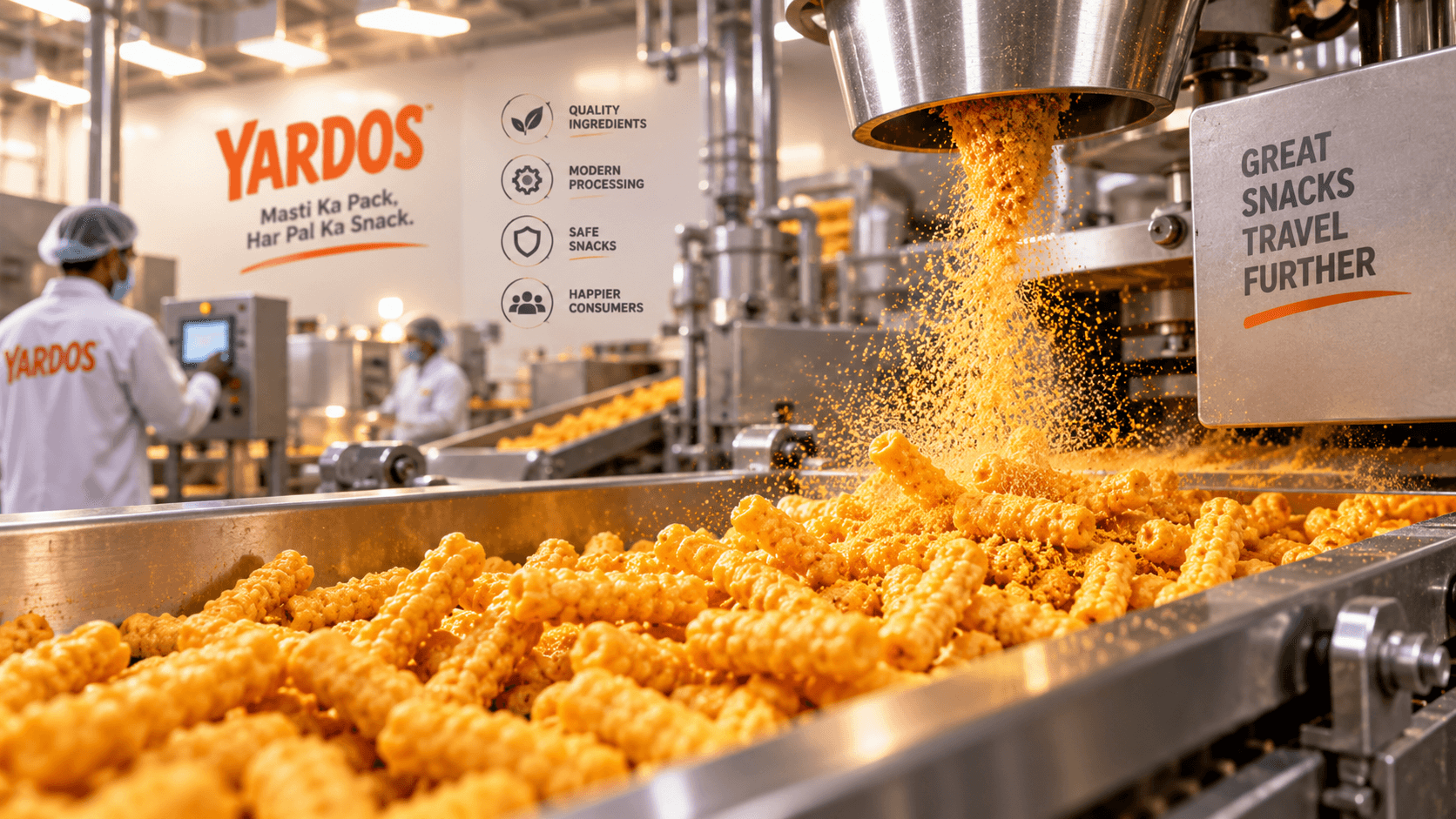
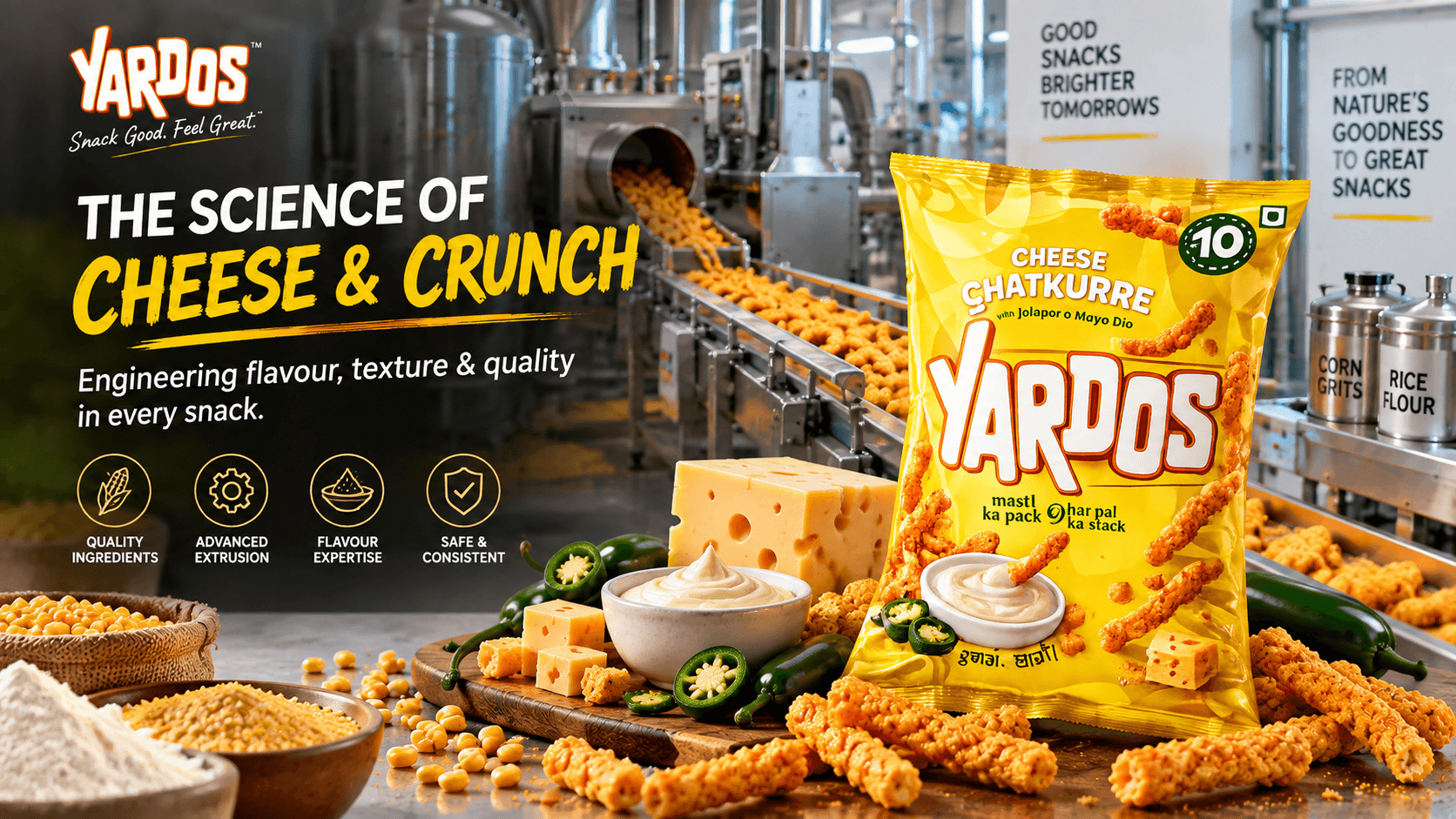
The foundation of any successful crunchy snack is the extrusion process. Twin-screw extrusion technology is the industry standard for creating consistent cellular structures. In this process, raw materials—typically corn grit, rice flour, or potato starch—are subjected to high shear, temperature, and pressure.
Starch gelatinization is the critical phase. As the material passes through the extruder barrel, the mechanical energy and thermal input cause the starch granules to swell and rupture. The moisture content of the feed material must be meticulously controlled, typically between 12% and 16%, to ensure optimal expansion upon exiting the die. If the moisture is too high, the product becomes dense and chewy; if too low, the expansion is erratic, leading to a brittle, unappealing texture. The die design determines the final shape, while the cooling rate post-extrusion dictates the final crispness. For manufacturers, maintaining a consistent bulk density is the primary metric for quality control, as it directly correlates to the consumer's perception of 'crunch.'
Flavor Chemistry: The Success of the Cheese and Jalapeno Profile
The Indian palate is characterized by a high threshold for flavor intensity. The cheese and jalapeno profile is a masterclass in sensory engineering. Dairy lipids provide a rich, mouth-coating sensation that carries the flavor compounds, while the capsaicinoids from the jalapeno stimulate the trigeminal nerve, providing the heat that Indian consumers associate with high-quality snacks.
This pairing is effective because the fat in the cheese seasoning acts as a solvent for the volatile aromatic compounds, ensuring a sustained flavor release. When developing these profiles, food scientists must balance the 'umami' notes of the cheese powder—derived from hydrolyzed vegetable proteins and yeast extracts—with the sharp, acidic notes of the jalapeno. The particle size of the seasoning is equally important; a fine, uniform coating ensures that every piece of the snack delivers a consistent flavor experience, preventing the 'bland-to-salty' gradient that often plagues lower-quality products.
Regulatory Compliance: Total Polar Compound Thresholds and FSSAI Standards
Operating within the Indian FMCG sector requires rigorous adherence to the Food Safety and Standards (Licensing and Registration of Food Businesses) Regulations. Schedule 4 of the FSSAI guidelines mandates strict Good Manufacturing Practices (GMP) and Good Hygienic Practices (GHP).
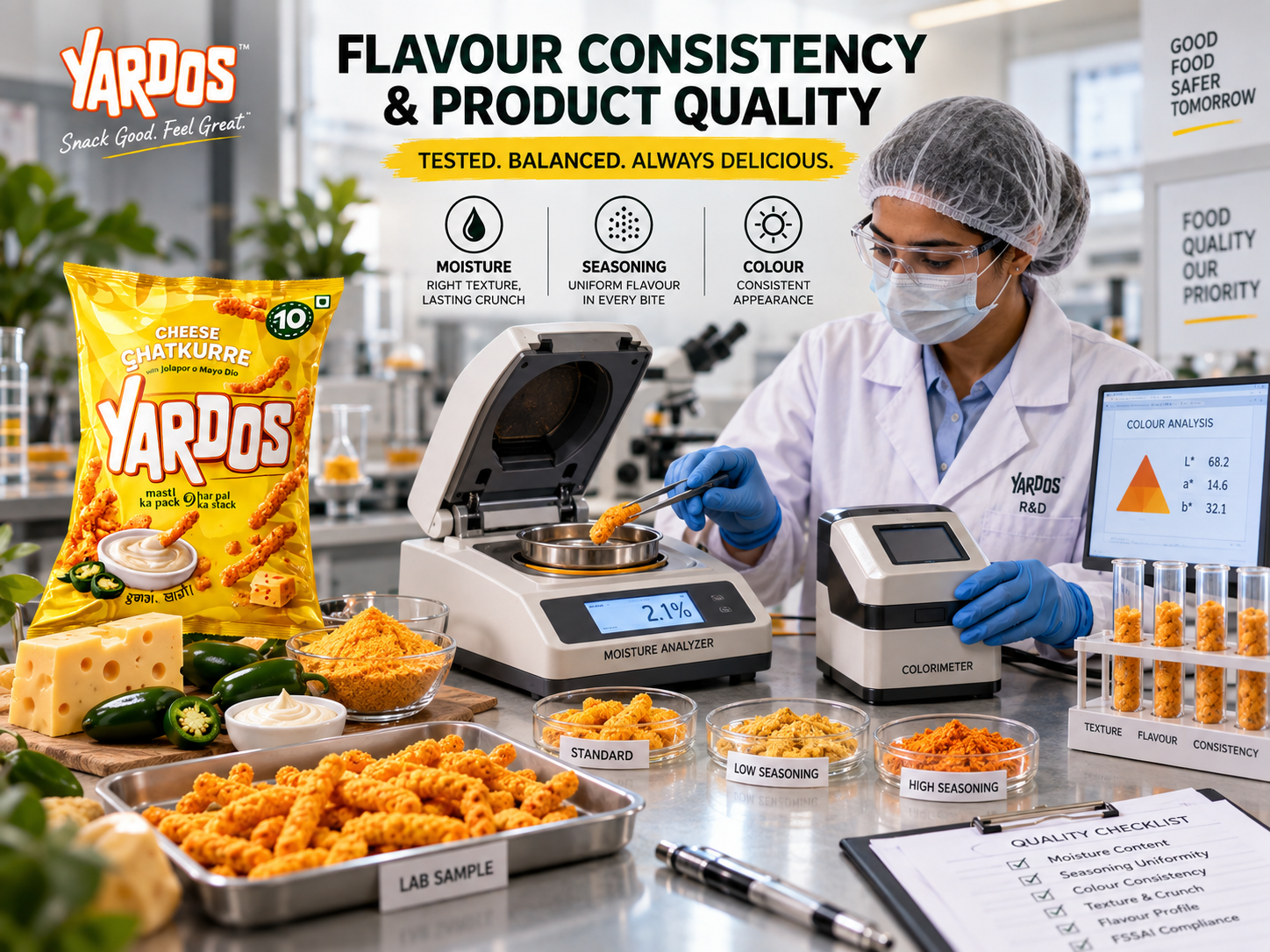
For fried or extruded snacks, the management of oil quality is paramount. Total Polar Compounds (TPC) are a primary indicator of oil degradation. FSSAI regulations stipulate that the TPC in frying oil must not exceed 25%. Exceeding this limit indicates the formation of harmful substances, including free fatty acids and polymers. Manufacturers must implement a strict oil turnover protocol, utilizing automated filtration systems to remove particulates and monitoring acid values daily.
Furthermore, moisture activity (Aw) must be kept below 0.3 to prevent microbial growth and ensure shelf-life stability. In a humid climate like India, the barrier properties of the packaging film are the final line of defense. High-barrier metallized BOPP (Biaxially Oriented Polypropylene) films, often nitrogen-flushed to displace oxygen, are essential to maintain the structural integrity and flavor profile of the snack from the factory floor to the retail shelf.
Market Dynamics: Why Cheese Snacks Resonate with Indian Consumers
The rise of 'on-the-go' snacking is a direct response to urbanization and the changing lifestyle of the Indian middle class. Consumers are increasingly seeking premium experiences that bridge the gap between traditional snacks and international flavors. Cheese-based snacks offer a sense of convenience and indulgence that fits into the busy schedules of students and professionals alike.
Distribution logistics play a critical role here. Maintaining the 'crunch' requires a robust cold-chain-adjacent approach, where inventory turnover is managed to prevent long-term exposure to ambient humidity. Brands that succeed in this space are those that treat distribution not just as a logistics function, but as a quality-preservation strategy.
Strategic Innovation: Future-Proofing Cheese Snack Portfolios
Innovation in the snack sector is moving toward clean-label initiatives. Consumers are increasingly scrutinizing ingredient lists, looking for natural colorants (such as paprika or turmeric) and avoiding artificial preservatives. The challenge for R&D teams is to achieve the same shelf-life and flavor intensity without relying on synthetic additives.
Data-driven flavor iteration is the future. By analyzing retail sales velocity and consumer feedback loops, brands can pivot their flavor profiles to match regional preferences—such as adjusting the spice level of a cheese-jalapeno snack for different geographic zones in India. Sustainable packaging is also a major focus; moving toward recyclable mono-material films is a necessary step for brands aiming to align with global environmental standards while maintaining the necessary barrier properties for snack preservation.
In conclusion, the engineering of a successful cheese snack is a balance of physics, chemistry, and regulatory discipline. By mastering the extrusion process, respecting the chemistry of flavor, and adhering to the safety standards set by the FSSAI, manufacturers can deliver products that satisfy the evolving demands of the Indian market.
References
- Food Safety and Standards Authority of India (FSSAI). (2011). Food Safety and Standards (Licensing and Registration of Food Businesses) Regulations, 2011. Schedule 4: General Hygienic and Sanitary Practices to be followed by Food Business Operators.
- Codex Alimentarius Commission. (2019). General Standard for Contaminants and Toxins in Food and Feed (CXS 193-1995).
- Fellows, P. J. (2016). Food Processing Technology: Principles and Practice (4th ed.). Woodhead Publishing.
- Singh, R. P., & Heldman, D. R. (2014). Introduction to Food Engineering (5th ed.). Academic Press.
- Bureau of Indian Standards (BIS). (2020). IS 1497:2020 - Methods of Sampling and Test for Processed Cereal and Pulse Products.