

Executive Summary: The Evolution of Indian Savoury Snacking
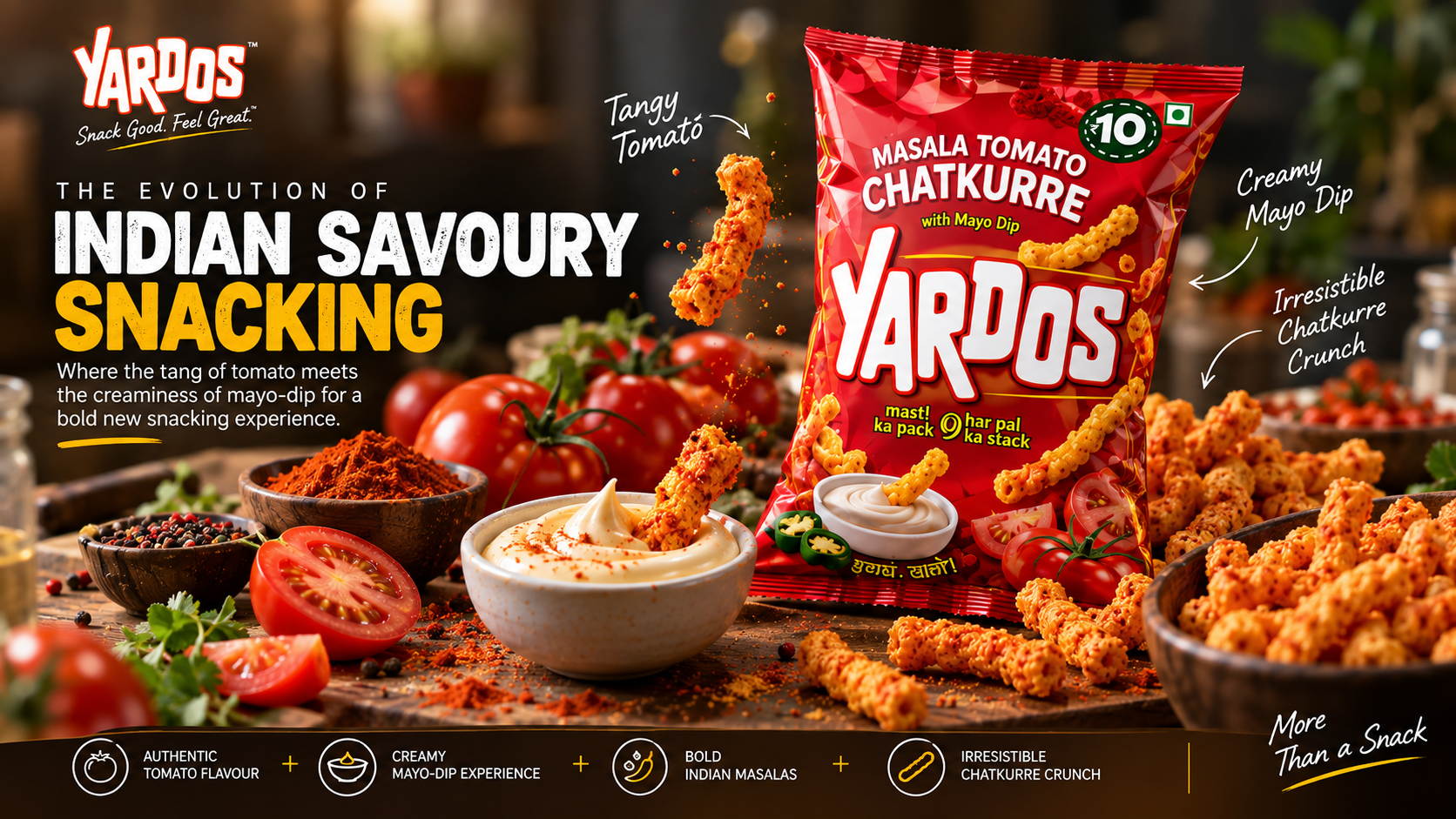
The Indian savoury snack sector has undergone a significant transformation, moving from traditional regional staples to complex, multi-dimensional flavour profiles. Consumers now demand snacks that offer more than simple saltiness or heat; they seek a sophisticated interplay of acidity, creaminess, and spice. Yardos Masala Tomato Chatkurre represents a specific evolution in this space, functioning as a fusion concept that combines the familiar tang of tomato-based masalas with the indulgent, mouth-coating properties of a mayo-dip experience. Sensory engineering in this context involves precise control over volatile flavour compounds and structural porosity. By analyzing the intersection of these variables, we can understand how modern snack development creates a cohesive, high-impact eating experience that resonates with contemporary Indian palates.
The Cultural Foundation of Masala Tomato Profiles
Tomato-based tanginess is deeply embedded in the Indian culinary consciousness, tracing its roots to the widespread adoption of the tomato in regional street food. The acidity of the tomato provides a necessary counterpoint to the heavy, oil-rich profiles of traditional fried snacks. When combined with a complex masala blend—typically featuring coriander, cumin, dried mango powder (amchur), and red chili—the tomato profile creates a balanced sensory experience. This combination is effective because it triggers multiple taste receptors simultaneously: the umami of the tomato, the heat of the chili, and the sourness of the amchur. In the context of Yardos Masala Tomato, this foundational profile serves as the baseline upon which more experimental flavour architectures are built, ensuring the product remains accessible while pushing the boundaries of traditional snack categories.
Sensory Engineering: The Mayo-Dip Inspired Innovation
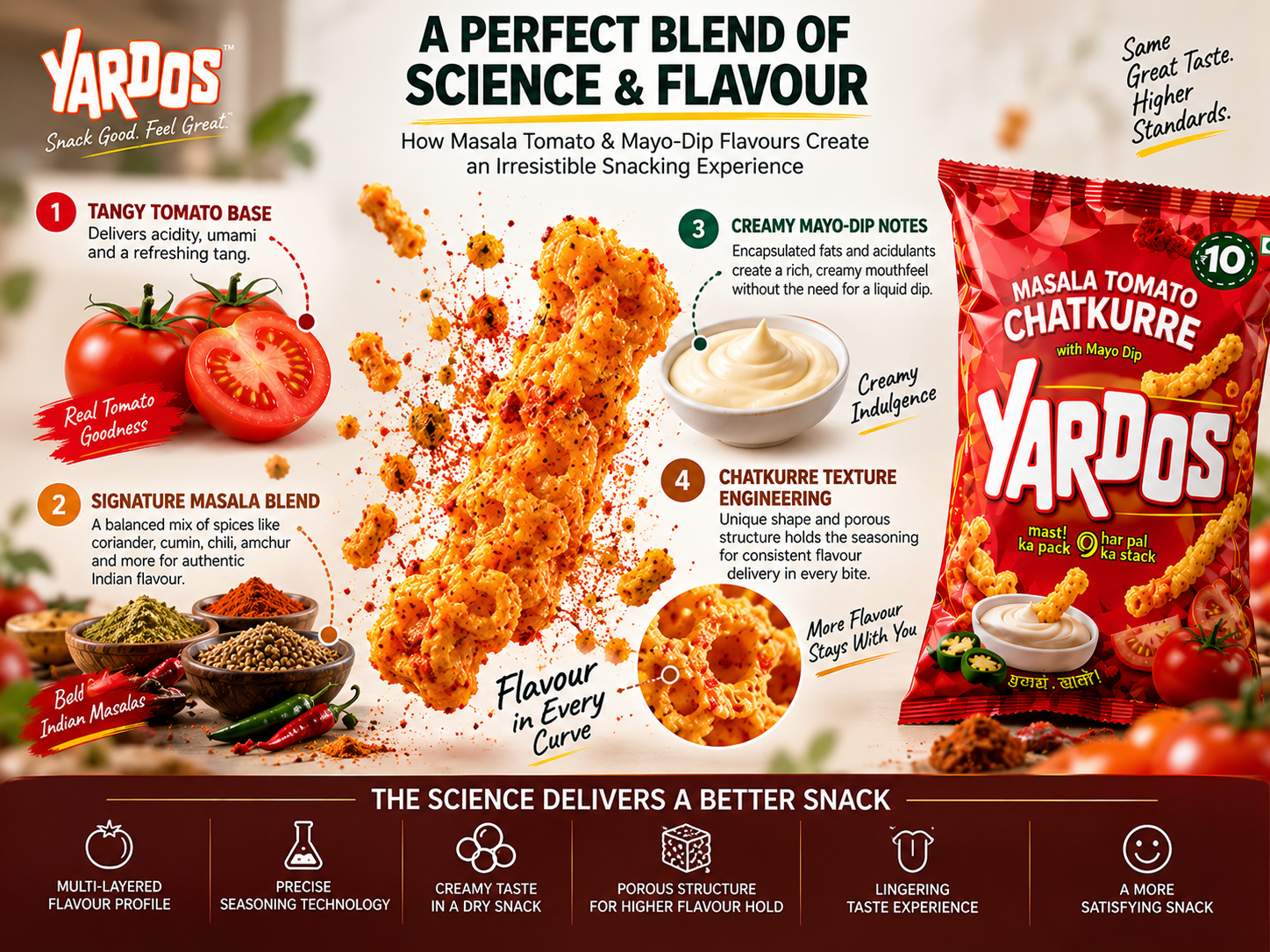
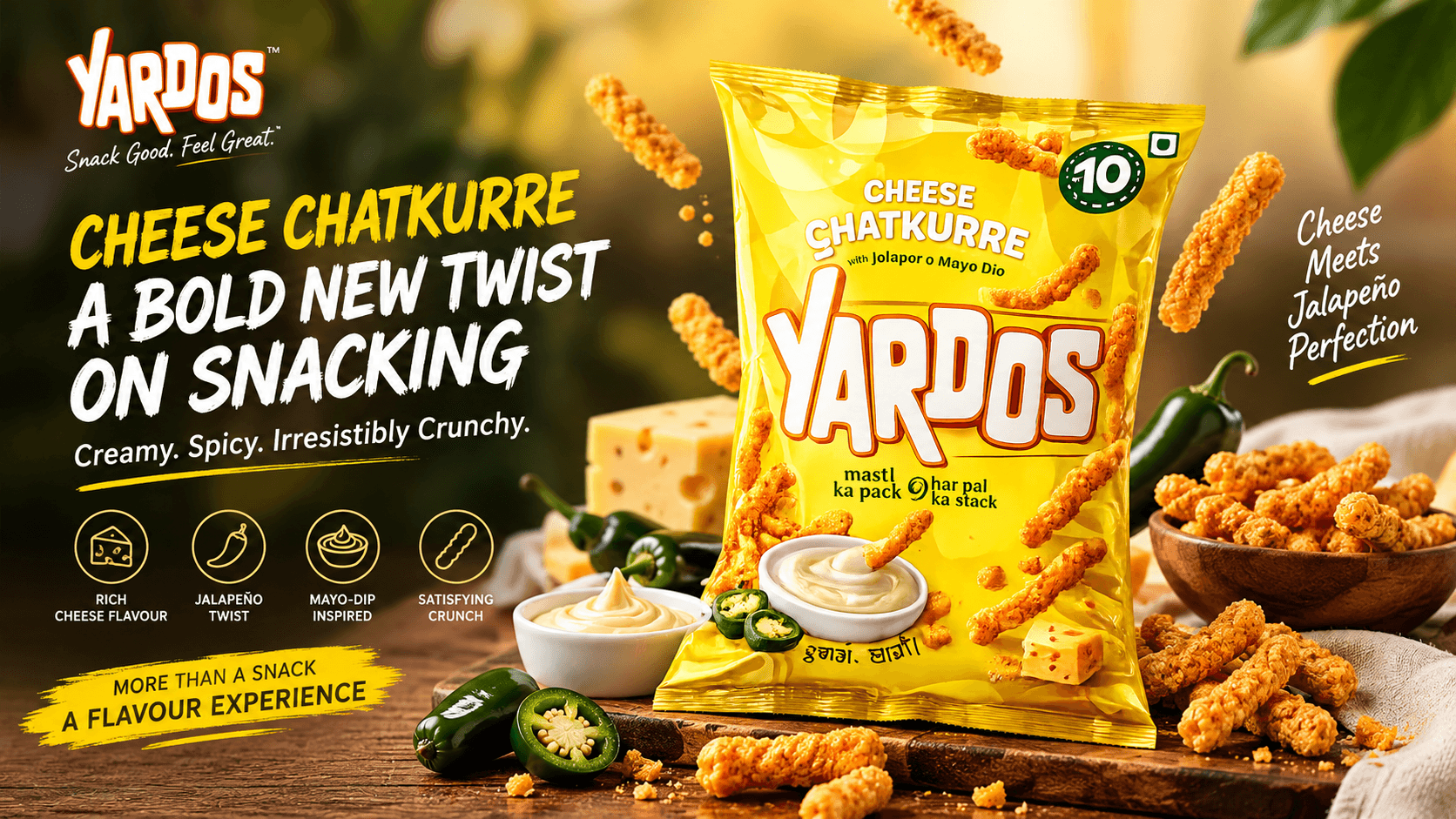
The 'Mayo-Dip Inspired' positioning of Yardos Masala Tomato Chatkurre is a feat of flavour chemistry. Replicating the sensory experience of a creamy dip without the use of liquid additives requires a meticulous approach to seasoning technology. Mayo-dip profiles are characterized by a high lipid content, a specific pH balance (acidity), and a distinct mouthfeel. To achieve this in a dry snack, manufacturers utilize encapsulated fats and high-potency acidulants. By balancing the lipid-based creaminess with sharp, acidic notes, the seasoning is designed to linger on the palate. This creates a 'dip-inspired' sensation where the snack itself provides the creaminess typically associated with a side accompaniment. This engineering ensures that the flavour delivery is immediate upon the first bite, maintaining intensity throughout the mastication process.
The Physics of Texture: Achieving the Signature Chatkurre Crunch
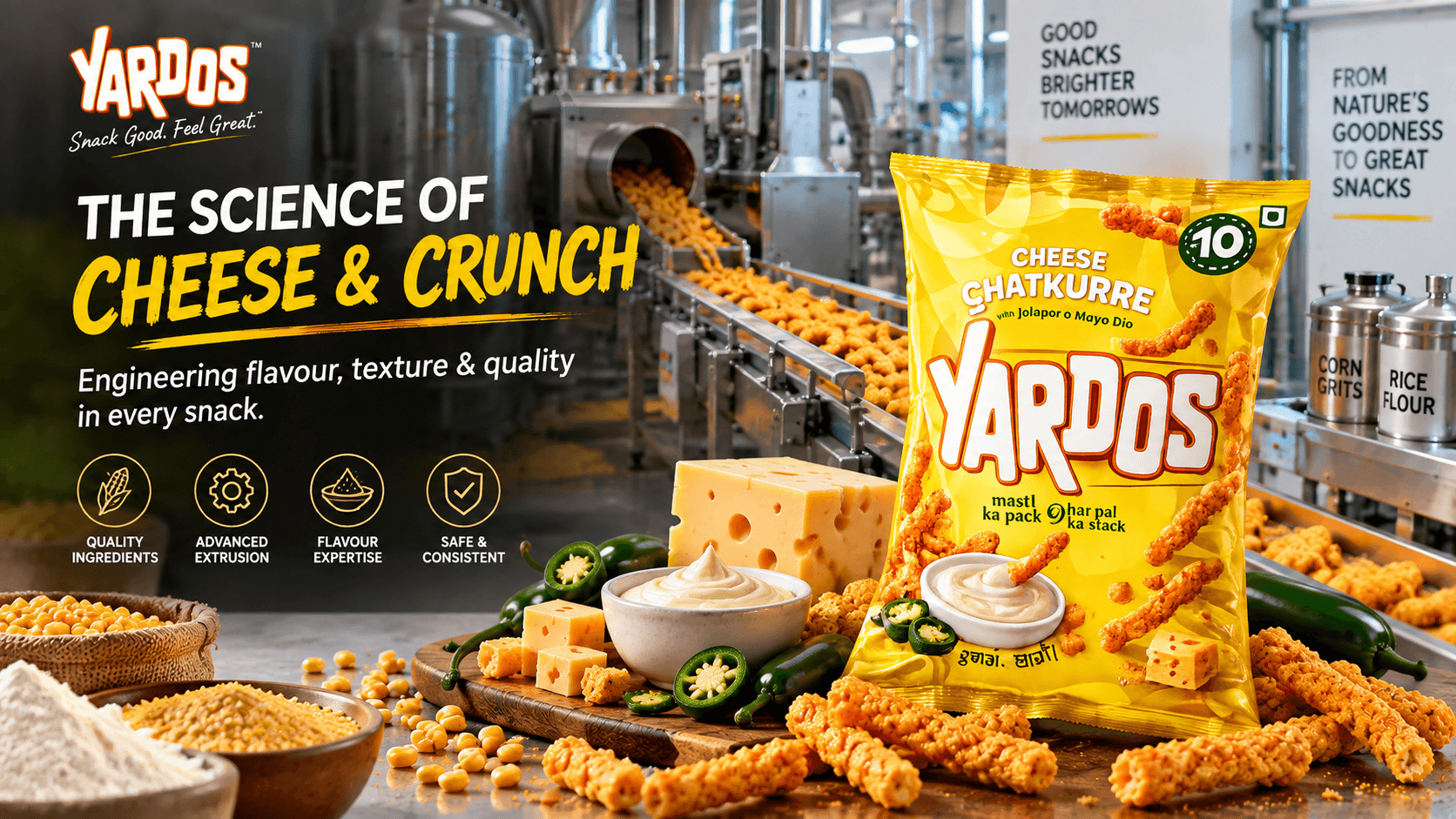
Texture is not merely a secondary characteristic; it is a fundamental component of flavour delivery. The Chatkurre format, characterized by its unique geometry and structural porosity, is engineered to maximize surface area. During the production process, starch gelatinization is carefully controlled within automated continuous indirect frying systems. These systems maintain precise temperature ranges—typically between 170°C and 185°C—to ensure uniform moisture removal. As moisture escapes the starch matrix, it leaves behind a porous structure that acts as a reservoir for the seasoning blend. This porosity is critical; it ensures that the masala and mayo-inspired particles are trapped within the snack's surface, preventing seasoning fallout and ensuring that every bite delivers a consistent flavour profile.
Regulatory Compliance and Quality Standards in Snack Production
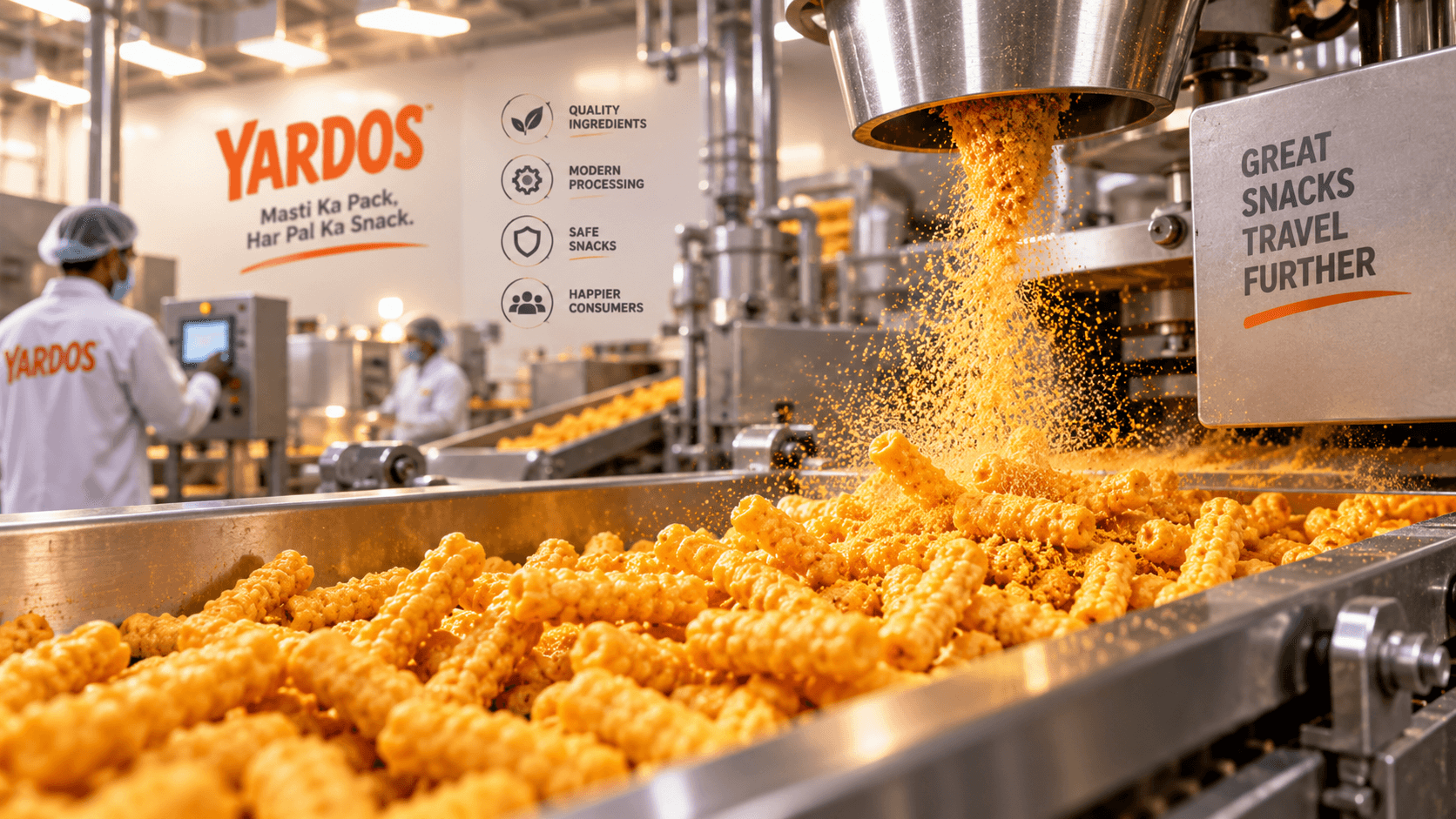
Manufacturing consistency in the Indian snack industry is governed by the Food Safety and Standards Authority of India (FSSAI). Yardos products, including the Masala Tomato Chatkurre, adhere to the Schedule 4 requirements of the Food Safety and Standards (Licensing and Registration of Food Businesses) Regulations. This includes rigorous Good Manufacturing Practices (GMP) and Good Hygienic Practices (GHP). A critical aspect of this compliance is the monitoring of Total Polar Compounds (TPC) in frying media. FSSAI regulations mandate that the TPC levels in oil must not exceed 25%. By utilizing automated oil management systems, manufacturers can continuously filter and refresh frying media, ensuring that the oil remains within safe parameters and that the final product maintains a clean, non-rancid flavour profile. Ingredient traceability is also maintained through detailed batch documentation, ensuring that every raw material, from the starch base to the spice extracts, meets established quality specifications.
Commercial Versatility and Consumer Snacking Occasions
Yardos Masala Tomato Chatkurre sits within a broader portfolio that includes Yardos Chatpate Pipes and Yardos Chatpate Wheels. Each of these formats serves a distinct purpose in the retail landscape. While Pipes and Wheels offer different textural experiences, the Masala Tomato Chatkurre is positioned to capture the impulse purchase segment that prioritizes intense, flavour-forward snacks. The versatility of this format allows it to be consumed as a standalone snack or as part of a larger social snacking occasion. By maintaining a consistent flavour architecture across different shapes, the brand provides consumers with a familiar sensory experience while offering variety in mouthfeel. This strategic approach to product design is essential for driving repeat purchase behavior in a competitive retail environment.
Conclusion: The Future of Flavour-Forward Snacking
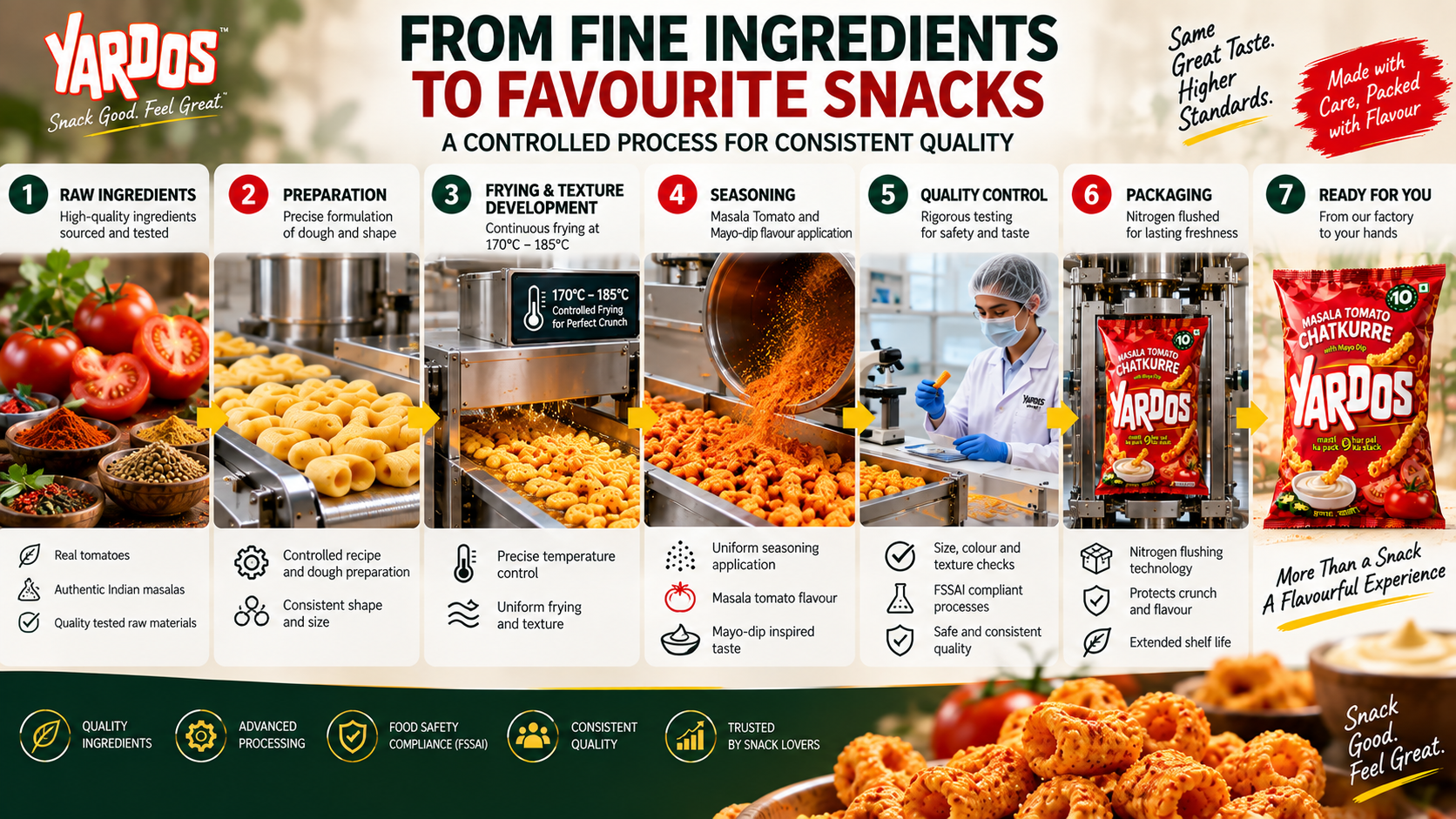
The development of Yardos Masala Tomato Chatkurre demonstrates the potential of combining traditional Indian flavour profiles with modern sensory engineering. By focusing on the physics of texture and the chemistry of seasoning, manufacturers can create products that satisfy the evolving demands of the Indian consumer. The success of such products relies on strict adherence to FSSAI standards, precise control over processing parameters, and a deep understanding of flavour delivery. As the industry continues to innovate, the intersection of tradition and technology will remain the primary driver of growth. Understanding these technical foundations provides a clear view of how high-quality snacks are conceptualized, engineered, and brought to market, ensuring safety and consistency at every stage of the supply chain.
References
- Food Safety and Standards Authority of India (FSSAI). (2011). Food Safety and Standards (Licensing and Registration of Food Businesses) Regulations. Ministry of Health and Family Welfare, Government of India.
- Food Safety and Standards Authority of India (FSSAI). (2017). Guidance Document on Food Safety Management System (FSMS) for Snacks and Namkeens. https://www.fssai.gov.in
- Codex Alimentarius Commission. (2020). General Standard for Contaminants and Toxins in Food and Feed (CXS 193-1995). FAO/WHO.
- Singh, R. P., & Heldman, D. R. (2014). Introduction to Food Engineering (5th ed.). Academic Press.
- Bureau of Indian Standards (BIS). (2019). IS 1497:2019 - Specification for Fried Snack Foods. Ministry of Consumer Affairs, Food and Public Distribution, Government of India.