
The Physics of Snack Texture: Engineering the Perfect Crunch and Mouthfeel
Executive Summary: The Sensory Science of Snack Texture
Snack texture serves as a primary determinant of consumer preference in the competitive Indian FMCG landscape. When a consumer interacts with a product, the sensory experience—defined by the initial bite force, the acoustic response (the "crunch"), and the subsequent breakdown of the product in the mouth (mouthfeel)—is the result of precise rheological engineering. Texture is not merely a subjective quality; it is a measurable physical property governed by the structural integrity of the food matrix.
At the intersection of food science and industrial production, snack texture relies on the manipulation of starch, protein, and lipid profiles. The goal is to achieve a specific cellular structure that balances structural rigidity with rapid dissolution upon mastication. Achieving this consistency requires a deep understanding of moisture migration, starch gelatinization, and the thermodynamic properties of the snack matrix. For manufacturers, maintaining this texture from the production line to the retail shelf is a significant technical challenge that dictates brand loyalty and product shelf-life.
The Mechanics of Extrusion and Starch Gelatinization
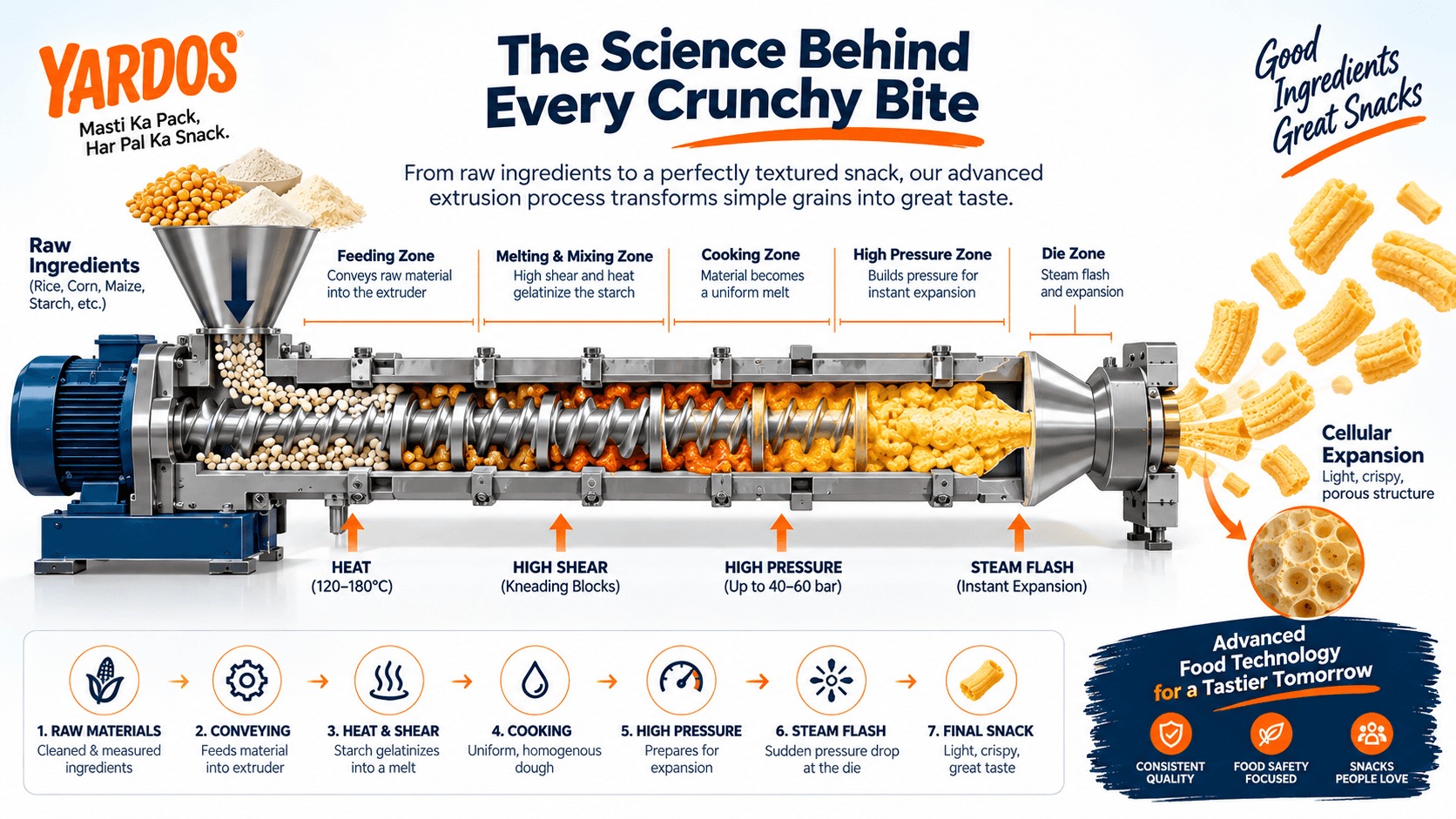
Modern snack production frequently utilizes high-shear extrusion to create the foundational structure of puffed or shaped snacks. The extrusion process is a thermomechanical operation where raw materials, typically cereal flours or starches, are subjected to high pressure, temperature, and shear forces within the barrel of an extruder.
As the raw material moves through the extruder, the starch granules undergo gelatinization. This process involves the irreversible swelling of starch granules in the presence of water and heat, leading to the loss of crystalline structure. When the molten starch mix exits the die, the sudden pressure drop causes the superheated water within the matrix to flash into steam, resulting in rapid expansion. This expansion creates the cellular structure—the "bubbles"—that define the final snack texture.
Parameters such as screw speed (typically ranging from 300 to 600 RPM), barrel temperature (often between 120°C and 180°C), and feed moisture content (usually 12% to 18%) must be tightly controlled. Deviations in these parameters alter the degree of starch gelatinization, directly impacting the expansion ratio and the density of the final product. A higher expansion ratio generally correlates with a lighter, crispier mouthfeel, whereas insufficient gelatinization results in a hard, glassy, or unpalatable texture.
Moisture Dynamics and the Glass Transition Phenomenon
Texture degradation in packaged snacks is primarily a function of moisture absorption. The physical state of a snack matrix is often described by its glass transition temperature (Tg). Below the Tg, the snack exists in a "glassy" state, characterized by high rigidity and the desired crunchy texture. As the product absorbs moisture from the environment, the Tg decreases. If the ambient temperature exceeds the Tg, the matrix transitions into a "rubbery" state, leading to the loss of crispness.
This phenomenon is exacerbated by the hygroscopic nature of starch-based snacks. Even minor fluctuations in relative humidity (RH) can cause the product to move from a crisp state to a soft, chewy state. In the Indian climate, where humidity levels can vary significantly, managing the moisture content is paramount. The equilibrium relative humidity (ERH) of the product must be lower than the ambient humidity of the storage environment to prevent moisture uptake. If the product's water activity (aw) rises above 0.3 to 0.4, the structural integrity of the snack matrix is compromised, rendering the product unacceptable to the consumer.
Regulatory Compliance and Texture Consistency Standards
In India, the Food Safety and Standards Authority of India (FSSAI) provides the regulatory framework for the manufacturing and storage of snacks. Compliance with FSSAI Schedule 4, which outlines Good Manufacturing Practices (GMP) and Good Hygiene Practices (GHP), is mandatory for all food business operators.
Regarding texture and shelf-life, FSSAI regulations emphasize the importance of controlling water activity (aw) to prevent microbial growth and chemical degradation. While specific moisture limits vary by product category, the industry standard for most fried or extruded snacks is to maintain a moisture content below 3% to 5%. Exceeding these levels not only leads to textural degradation but also increases the risk of lipid oxidation and microbial spoilage. Manufacturers must implement rigorous testing protocols, including the use of calibrated water activity meters, to ensure that every batch meets these safety and quality thresholds before it enters the distribution chain.
Commercial Strategies for Texture Preservation in Distribution
Preserving the engineered texture of a snack during distribution requires advanced packaging solutions. Barrier film technology is the primary defense against environmental moisture and oxygen. Multi-layer laminates, often incorporating metallized polyester (METPET) or oriented polypropylene (OPP), are utilized to provide high moisture vapor transmission rate (MVTR) and oxygen transmission rate (OTR) barriers.
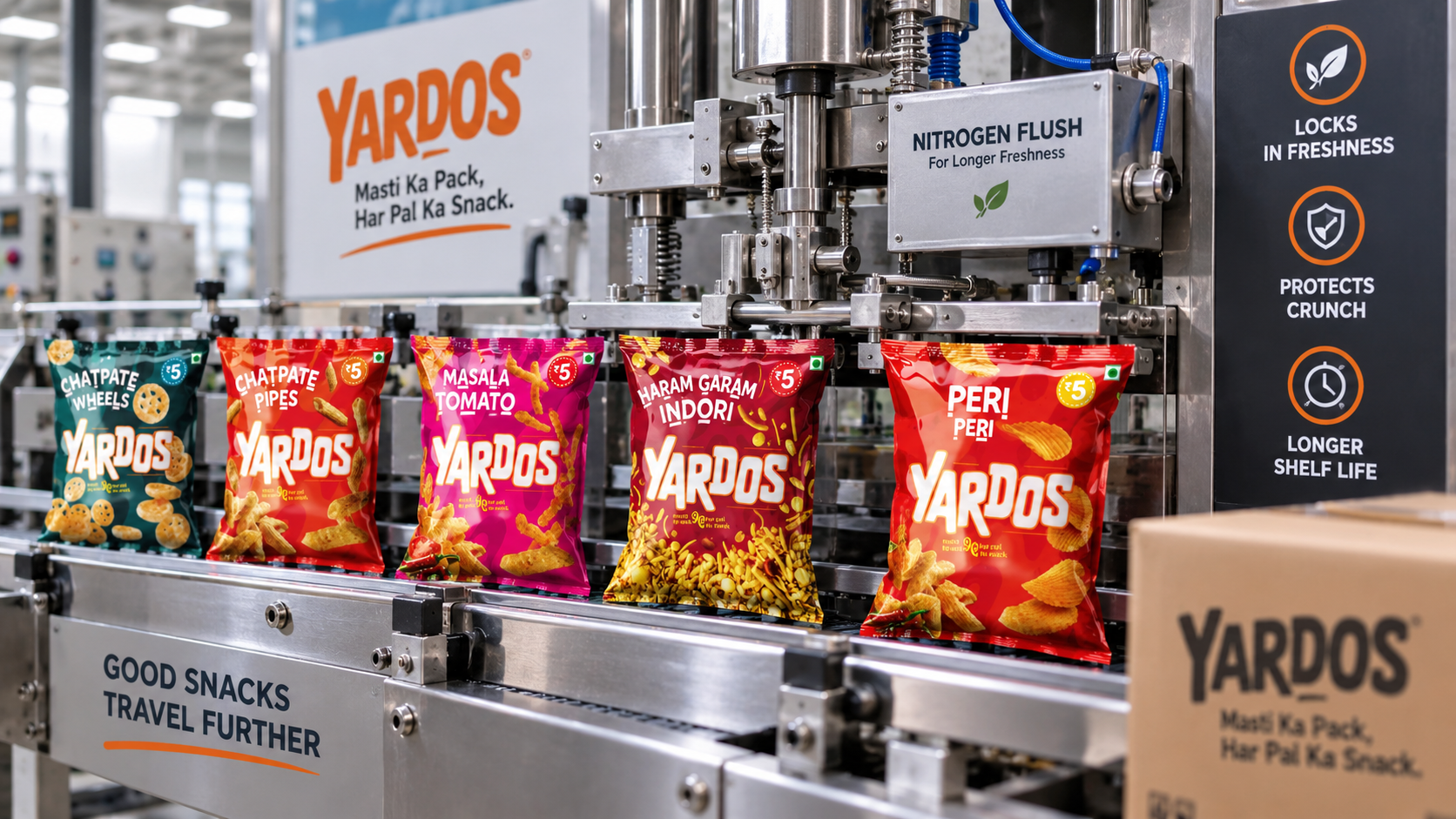
Nitrogen flushing is another critical component of the packaging process. By replacing the oxygen inside the pouch with nitrogen, manufacturers can significantly reduce the rate of oxidative rancidity in snacks containing fats or oils. This process also provides a protective cushion for the product, minimizing mechanical breakage during transit. The effectiveness of these packaging strategies is verified through accelerated shelf-life testing (ASLT), where products are subjected to controlled high-temperature and high-humidity conditions to simulate long-term storage.
Actionable Industry Takeaways for Quality Assurance
To maintain consistent snack texture, quality assurance teams must move beyond subjective sensory evaluations. Implementing real-time moisture monitoring on the production line, such as near-infrared (NIR) spectroscopy, allows for immediate adjustments to drying parameters. This ensures that the moisture content is uniform across all production runs.
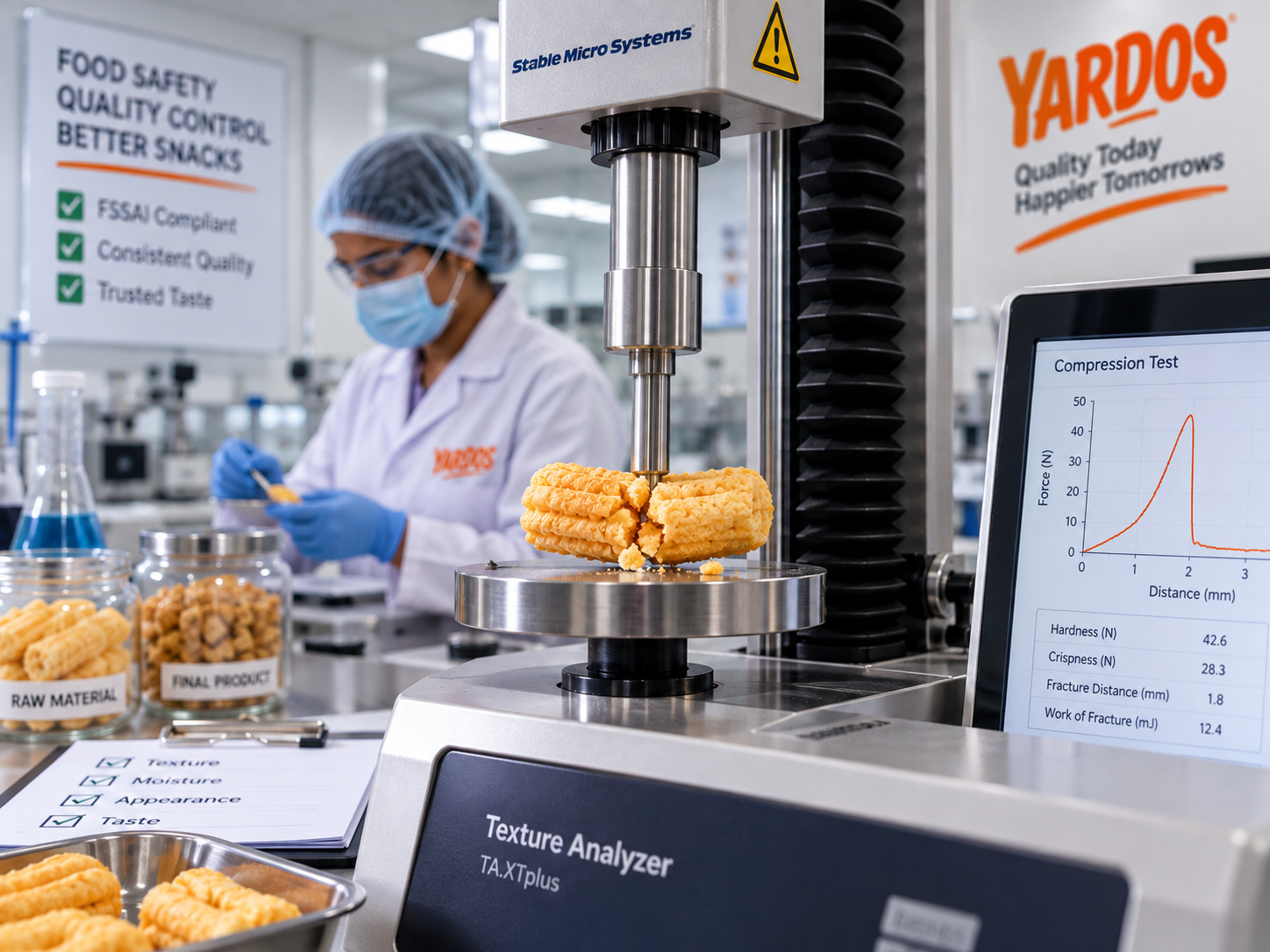
Furthermore, instrumental texture analysis—using devices like a texture analyzer to measure the force required to fracture a sample—provides objective data that can be correlated with sensory panel results. By establishing a baseline for "peak force" and "acoustic emission" during the fracture of a snack, manufacturers can create a standardized quality profile. This data-driven approach allows for the systematic optimization of raw materials, extrusion parameters, and packaging materials, ensuring that the final product consistently delivers the expected sensory experience to the consumer.
References
- Food Safety and Standards Authority of India (FSSAI). (2011). Food Safety and Standards (Licensing and Registration of Food Businesses) Regulations, 2011. Schedule 4: General Hygienic and Sanitary Practices to be followed by Food Business Operators.
- Food and Agriculture Organization (FAO) / World Health Organization (WHO). (2007). Codex Alimentarius: Code of Hygienic Practice for Low-Moisture Foods.
- Bureau of Indian Standards (BIS). (2018). IS 1011: Biscuits - Specification (Relevant for moisture control standards in baked/extruded goods).
- Roos, Y. H. (2010). Glass transition in food systems: A review. Journal of Food Engineering, 99(4), 415-423.
- Singh, R. P., & Heldman, D. R. (2014). Introduction to Food Engineering (5th ed.). Academic Press.