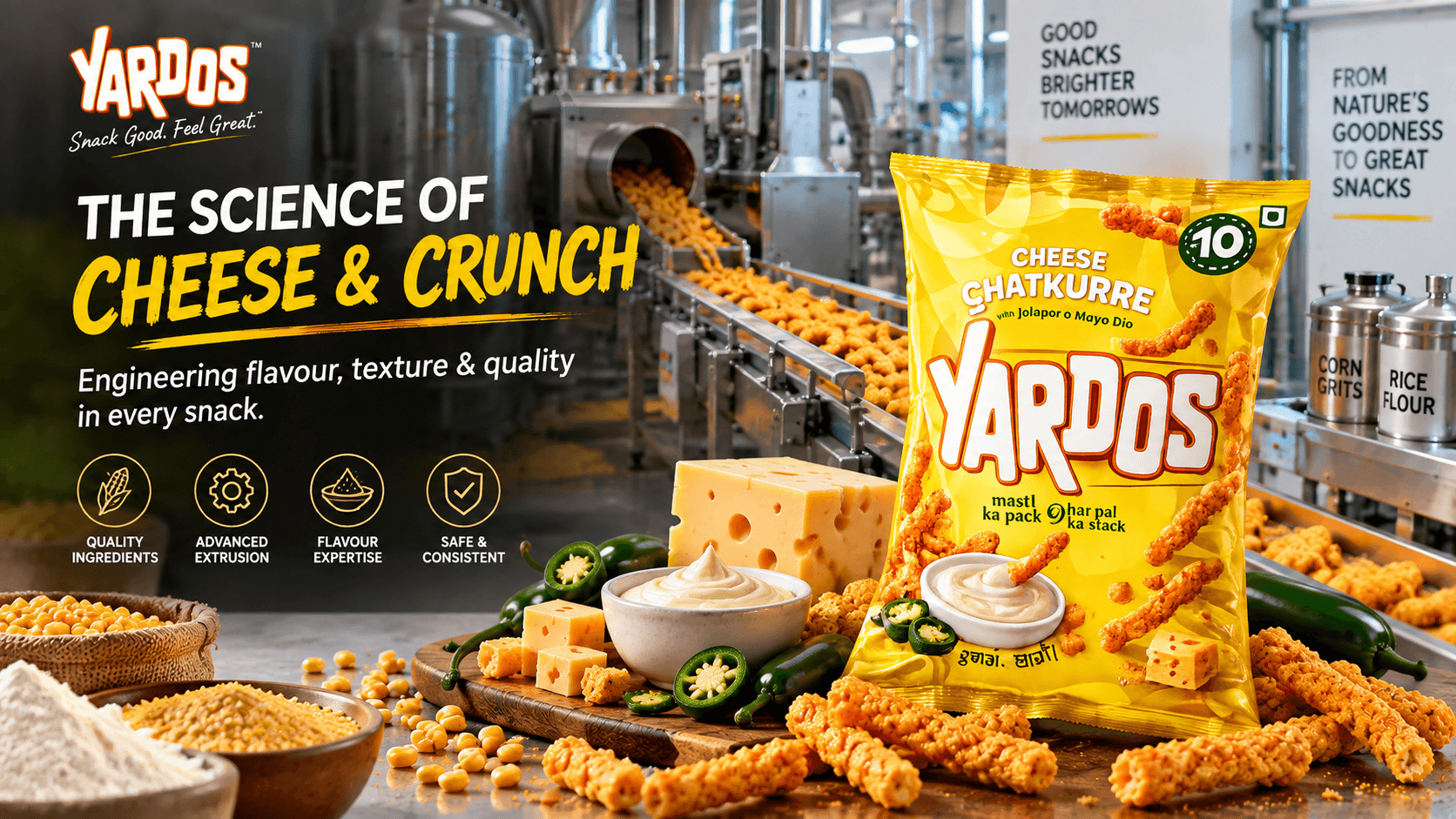


Executive Summary: Foundational Mechanics and High-Velocity Dynamics of the FMCG Industry
The FMCG industry operates on the principle of high-volume, low-margin, and rapid-turnover inventory. Unlike durable goods, fast-moving consumer goods are characterized by short shelf lives and high frequency of purchase. The sector encompasses packaged foods, beverages, personal care items, and household chemical formulations. Operational success in this domain is predicated on the velocity of the supply chain—the speed at which raw materials are converted into finished goods and subsequently cleared from retail shelves. This guide examines the engineering, regulatory, and logistical architecture that sustains this industry, with a focus on the rigorous standards maintained at the Yardos processing facility in Nagpur, Maharashtra.
Physicochemical Classification and Material Science of Fast-Moving Consumer Goods
The physical state of FMCG products dictates the complexity of their manufacturing. Liquid, emulsion, and solid matrices require specific stabilization techniques to prevent phase separation and microbial spoilage. In the snack food sector, the material science revolves around the rheological properties of starches and lipid-protein systems. The behavior of these matrices under thermal stress is a critical determinant of product quality and safety. For instance, the extrusion of starch-based snacks involves complex shear-induced degradation of amylopectin, which must be precisely controlled to achieve the desired expansion ratio and texture.
Thermal Processing, Starch Gelatinization, and Emulsion Stability in Ambient Food Matrices
Industrial thermal processing, particularly extrusion, requires strict adherence to shear rate parameters and temperature profiles. The gelatinization of starch occurs when the crystalline structure of the starch granule is disrupted by heat and moisture, leading to the formation of a viscous paste. In Yardos’s Nagpur facility, extrusion processes are calibrated to manage the glass transition temperature (Tg) of the starch matrix. If the Tg is not reached, the product remains dense and unpalatable; if it is exceeded, the polymer chains undergo excessive degradation, leading to structural collapse. Furthermore, the stability of ambient gravies and sauces relies on Hydrophilic-Lipophilic Balance (HLB) optimization. By selecting emulsifiers with appropriate HLB values, manufacturers prevent the coalescence of lipid droplets in oil-in-water emulsions, ensuring shelf stability without the need for excessive chemical preservatives.
Moisture Sorption Isotherms, Water Activity (aw), and Packaging Barrier Performance
Microbial stability in dry snack foods is governed by the thermodynamic principle of water activity (aw). To prevent the proliferation of bacteria, yeasts, and molds, the aw of finished products must be maintained below 0.60. This threshold also minimizes the rate of hydrolytic rancidity, which occurs when moisture facilitates the breakdown of triglycerides into free fatty acids. Monitoring moisture sorption isotherms allows engineers to predict how a product will react to ambient humidity, ensuring that the moisture content remains within the safe zone throughout the product's shelf life.
Modified Atmosphere Packaging (MAP) and Barrier Polymer Performance Under Variable Ambient Enthalpy
Packaging serves as the primary defense against environmental degradation. The performance of packaging materials is measured by their Oxygen Transmission Rate (OTR) and Water Vapor Transmission Rate (WVTR). For high-fat snacks, Yardos utilizes biaxially oriented polypropylene (BOPP) and metallized polyethylene terephthalate (MET-PET) laminates. These materials offer the necessary barrier properties to prevent oxygen-induced autoxidation of unsaturated fatty acids. Nitrogen headspace flushing is employed to displace oxygen, reducing the residual oxygen concentration to below 2% to extend the oxidative induction period of the product.
FSSAI Schedule 4 Mandates: Chemical Safety, Lipid Degradation, and Process Hygiene Controls
Compliance with FSSAI Schedule 4 is non-negotiable for any manufacturing entity operating in India. This regulatory framework mandates strict process hygiene and chemical safety protocols. At the Nagpur facility, the focus is on the continuous monitoring of deep-frying oil. The degradation of oil is quantified by the Total Polar Compounds (TPC) content. FSSAI regulations stipulate that TPC levels must not exceed 25%. When TPC values approach this limit, the oil must be discarded or treated. Yardos employs continuous synthetic magnesium silicate filtration systems to remove polar degradation products, effectively managing the Acid Value and Peroxide Value (PV) of the frying medium.
Total Polar Compounds (TPC), Acid Value Thresholds, and Aflatoxin Testing in Industrial Fryer Operations
Beyond TPC, the safety of raw materials is paramount. Aflatoxins (B1, B2, G1, G2), which are toxic secondary metabolites produced by Aspergillus fungi, represent a significant risk in grain and peanut processing. High-performance liquid chromatography (HPLC) is the gold standard for quantifying these contaminants. Every batch of raw material entering the Yardos facility undergoes rigorous HPLC screening to ensure that heavy metal and mycotoxin concentrations remain well within the permissible limits defined by the Food Safety and Standards Authority of India.
Strategic Distribution Engineering: Central Freight Geographies and the Nagpur Multi-Modal Hub
The efficiency of the FMCG supply chain is heavily dependent on logistical geography. Nagpur, often referred to as the 'Zero Mile' center of India, provides a distinct advantage due to its proximity to major National Highways (NH-44 and NH-53). This central location allows for the compression of pan-Indian lead times to under 48 hours. By integrating with multi-modal logistics parks and automated dry ports, Yardos ensures that finished goods are moved from the manufacturing floor to regional distribution centers with minimal dwell time, reducing the risk of product degradation during transit.
Supply Chain Velocity Engineering: Managing SKU Proliferation, Days of Inventory (DOI), and Shelf-Life Decay
Inventory management in the FMCG sector is a mathematical challenge. The goal is to minimize Days of Inventory (DOI) while maintaining product availability. Yardos utilizes advanced Enterprise Resource Planning (ERP) algorithms to balance the cost of inventory holding against the risk of product obsolescence. The implementation of First-Expired, First-Out (FEFO) warehouse execution systems ensures that older stock is prioritized for shipment, effectively managing the shelf-life decay of sensitive products. Multi-echelon inventory optimization (MEIO) is used to determine the ideal stock levels across various nodes in the distribution network.
Distributor Commercial Integration: Margin Structures, Channel Economics, and Partnership Onboarding
For prospective distributors, the commercial viability of the FMCG sector is defined by margin structures and working capital rotation. Yardos offers a transparent tiered margin architecture, typically ranging from 8% to 15% depending on the volume and channel type. Successful partnership requires that distributors maintain dedicated temperature-controlled warehousing and utilize automated track-and-trace systems for inventory management. By aligning distributor operations with the high-velocity requirements of the manufacturer, partners can maximize their Return on Investment (ROI) and ensure consistent penetration into secondary retail channels.
References
- Food Safety and Standards Authority of India (FSSAI). (2011). Food Safety and Standards (Licensing and Registration of Food Businesses) Regulations, 2011. Schedule 4: General Hygienic and Sanitary Practices. https://www.fssai.gov.in
- Labuza, T. P. (1984). Moisture Sorption: Practical Aspects of Isotherm Measurement and Use. American Association of Cereal Chemists.
- Robertson, G. L. (2016). Food Packaging: Principles and Practice. CRC Press.
- Singh, R. P., & Heldman, D. R. (2014). Introduction to Food Engineering. Academic Press.
- Ministry of Road Transport and Highways, Government of India. (2022). Logistics Efficiency and Multi-Modal Connectivity Report. https://morth.nic.in
- International Commission on Microbiological Specifications for Foods (ICMSF). (2011). Microorganisms in Foods 8: Use of HACCP Principles for Food Standardization.